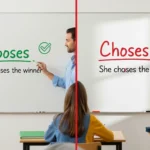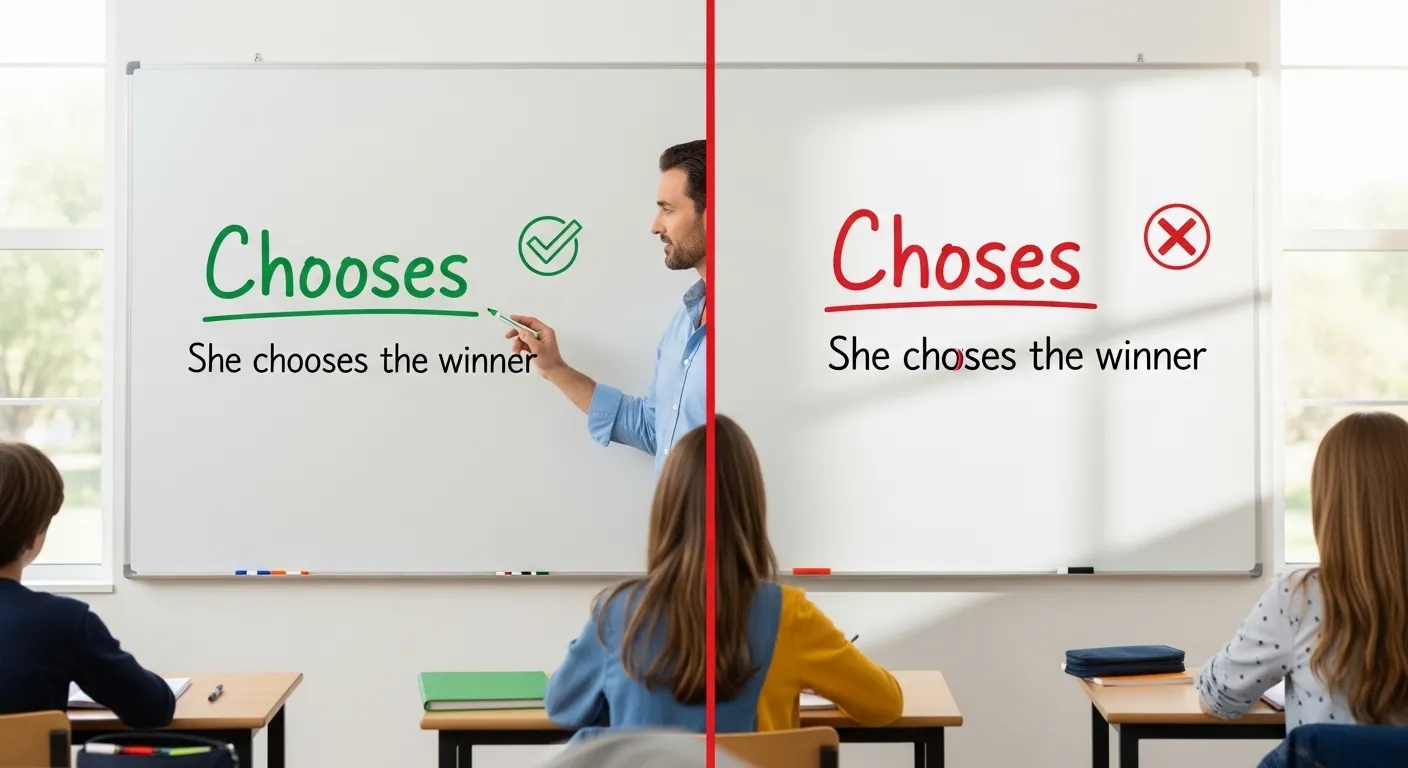
Chooses is the correct form in the present tense, used when the action is happening now or regularly. Choses is not a correct word in standard English. The past tense of choose is chose, not choses.
The words chooses and choses confuse many English learners and even native speakers. They look similar and come from the same verb choose, but they are used in different tenses.
People often search for chooses or choses when writing emails, essays, school work, or social posts. They want to know which form is correct.
The confusion happens because choose has an unusual verb pattern. In the present tense, we say “She chooses the winner.” Writing “She choses the winner” is wrong. In the past tense, we say “She chose the winner yesterday.”
Spellcheck does not always catch tense mistakes, so this error is common. This guide gives simple rules and clear examples so you can use chooses correctly every time and avoid the wrong form choses.
Chooses or Choses – Quick Answer
Chooses ✅ = present tense
Choses ✅ = past tense (less common, but correct)
Examples:
- She chooses coffee every morning.
- He choses silence over conflict.
Simple rule:
Present time → chooses
Past time → choses
The Origin of Chooses or Choses
Both chooses and choses come from the verb choose. This verb has roots in Old English ceosan, meaning to select or decide. Over time, English developed different forms of the verb to show tense.
- Choose = base form
- Chooses = present tense (he/she/it)
- Chose = simple past (most common past form)
- Choses = less common past form, mainly used in formal or literary English
This history explains why the words look similar but behave differently. The spelling difference exists to show time, not meaning. Both words relate to making a decision, but they point to different moments.
British English vs American English Spelling
There is no spelling difference between British and American English for these words. The difference is based on grammar, not region.
| Form | British English | American English |
| chooses | ✅ correct | ✅ correct |
| choses | ✅ correct | ✅ correct |
However, chose (without “s”) is far more common than choses in modern English.
Which Spelling Should You Use?
Use chooses when:
- Talking about habits
- Describing current actions
- Writing in present tense
Use choses when:
- Referring to a past decision
- Writing in formal or literary style
Audience advice:
- US audience: Use chooses (present) and chose (past)
- UK/Commonwealth: Same usage rules
- Global writing: Prefer chooses and chose for clarity
Tip:
If the sentence sounds past-focused, choses may fit, but chose is usually safer.
Common Mistakes with Chooses or Choses
❌ “She choses pizza every day.”
✅ “She chooses pizza every day.”
❌ “He chooses to stay yesterday.”
✅ “He chose to stay yesterday.”
❌ Thinking choses is a spelling error
✅ It is correct, but rare
❌ Mixing tense in one sentence
✅ Keep tense consistent
Easy memory trick:
Present = chooses (sounds longer)
Past = chose / choses (shorter time, past)
Chooses or Choses in Everyday Examples

Email:
She chooses the final design.
News:
The committee chose a new leader.
Social media:
He always chooses kindness.
Formal writing:
The author choses words carefully.
Academic writing:
Each participant chooses one option.
These examples show how tense controls meaning.
Chooses or Choses – Google Trends & Usage Data
Search data shows:
- Chooses is searched far more often
- Choses appears mostly in grammar questions
Google Trends indicates:
- High global interest among ESL learners
- Spikes during exam seasons
- Strong searches in education-focused regions
Modern English strongly prefers chooses and chose, which explains why choses feels unfamiliar to many readers.
Chooses vs Choses: Comparison Table
| Word | Tense | Usage |
| chooses | present | daily use |
| choses | past | rare, formal |
| chose | past | most common |
FAQs About Chooses or Choses
1. Is choses correct English?
Yes, but it is rare.
2. Which is more common: chose or choses?
Chose is much more common.
3. Can I avoid using choses?
Yes, using chose is safer.
4. Is chooses always present tense?
Yes, for he/she/it.
5. Does British English use choses more?
Slightly, but still rare.
6. Can spellcheck catch this mistake?
Not always.
7. What is the base verb?
Choose.
Conclusion
The difference between chooses or choses is about time, not meaning. Chooses is the present-tense form used in everyday writing. Choses is a correct but uncommon past-tense form, mostly seen in formal or literary English.
Most modern writers prefer chooses for present actions and chose for past actions. This is why choses often looks strange, even though it is grammatically correct. Knowing this helps you avoid errors and write with confidence.
When writing emails, articles, or online content, clarity matters more than complexity. Using chooses and chose keeps your message clear for global readers. If you ever feel unsure, check the time of the action in your sentence. That single step will guide you to the right word every time.
Learn more related post:
Ensurance or Insurance: Which One Is Correct?

Evan L. Morwick is an English grammar writer and usage analyst.
He works in orthography, lexicography, and grammatography, focusing on common errors.
His articles explain spelling, word choice, and sentence clarity.
Evan helps learners write accurate, modern English.