Have you ever read a rental agreement and seen the word leasor used for the property owner, then wondered if it should be lessor instead? You are not alone.
Many people search for “leasor or lessor” because these words look similar, sound alike, and appear often in legal and property documents. A small spelling difference can create big confusion, especially when contracts and money are involved.
This confusion is common among tenants, landlords, students, and even professionals who deal with leases. Since legal language must be precise, using the wrong term can make your writing look unprofessional or unclear.
People often assume leasor is logical because it comes from lease, but English does not always follow logic in spelling.
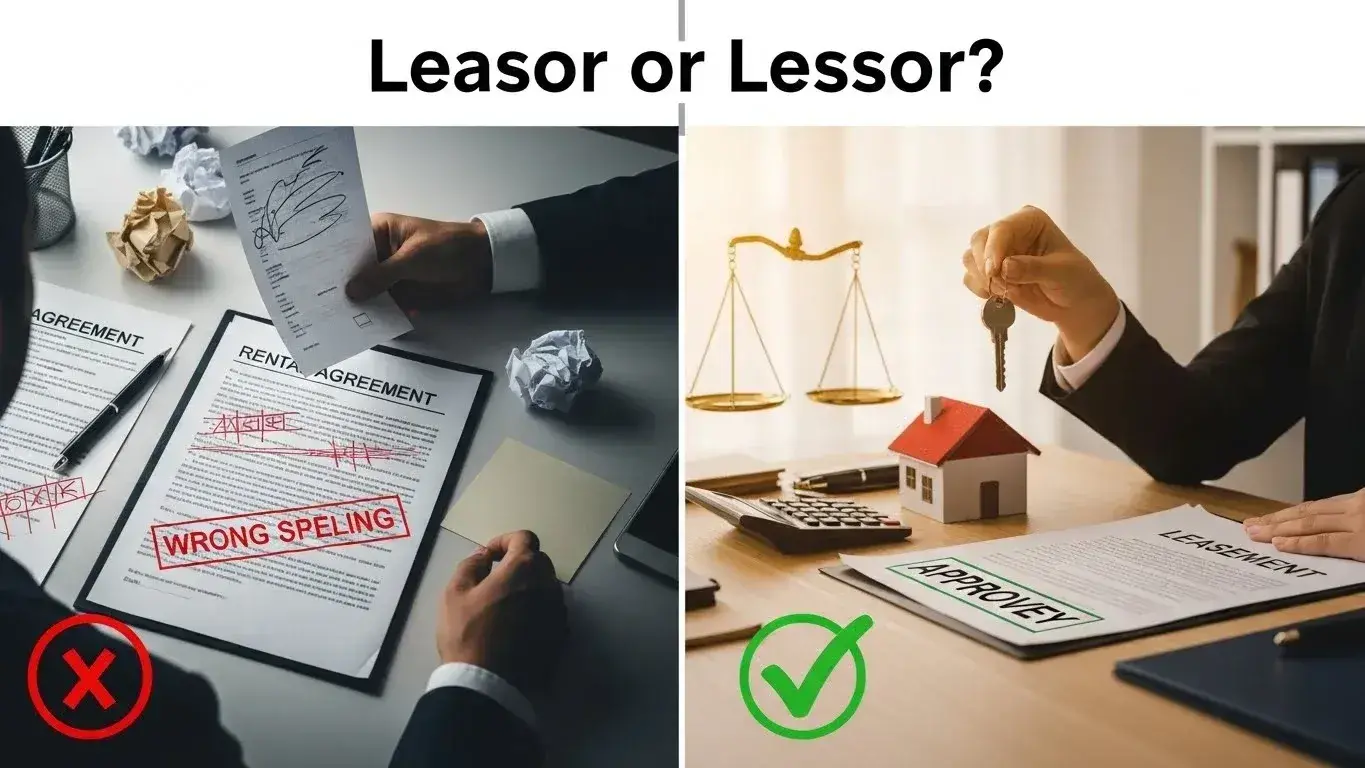
Leasor or Lessor – Quick Answer
Lessor is the correct term.
Leasor is a misspelling and should not be used in formal English.
Examples:
- The lessor owns the property. ✅
- The lessor signed the lease agreement. ✅
- The leasor is responsible for repairs. ❌
Simple rule:
Owner who gives the lease → lessor
The Origin of Leasor or Lessor
The word lessor comes from the verb to lease. It entered English through Old French and legal Latin. Over time, English added the -or ending to describe the person who performs an action. In this case, the person who leases out property is the lessor.
The double s in lessor is part of its historical spelling and follows established legal usage. English law and property language have used lessor for centuries.
Leasor does not have a historical or linguistic origin in standard English. It appears only because people assume it should match the spelling of lease. This is why the spelling difference exists: one is a legal term, the other is a common mistake.
British English vs American English Spelling
There is no difference between British and American English for this term.
Both use lessor as the correct spelling.
Comparison Table
| Form | British English | American English | Correct? |
|---|---|---|---|
| Lessor | Lessor | Lessor | ✅ Yes |
| Leasor | Not used | Not used | ❌ No |
This rule applies worldwide.
Which Spelling Should You Use?
No matter who your audience is, the choice is clear.
- US audience: Use lessor
- UK audience: Use lessor
- Commonwealth countries: Use lessor
- Global audience: Use lessor
In legal writing, contracts, emails, and academic work, leasor should always be avoided. Using the wrong spelling can weaken clarity and professionalism.
Common Mistakes with Leasor or Lessor
❌ The leasor must maintain the building.
✅ The lessor must maintain the building.
❌ The leasor and lessee agreed on terms.
✅ The lessor and lessee agreed on terms.
❌ Leasor is another spelling of lessor.
✅ No. Only lessor is correct.
Tip:
Remember the pair: lessor and lessee. Both have double s.
Leasor or Lessor in Everyday Examples
Emails:
- Please contact the lessor for approval.
News:
- The lessor increased rent after the contract ended.
Social Media:
- Always read what the lessor is responsible for.
Formal Writing:
- The lessor grants the property to the lessee under agreed terms.
Legal Documents:
- The lessor retains ownership of the asset.
Leasor or Lessor – Google Trends & Usage Data
Search trends show that lessor is widely used in:
- Real estate
- Legal writing
- Business contracts
The term leasor appears mostly in search queries where users want to check if it is correct. High search interest comes from the US, UK, India, Pakistan, and Australia, showing that this confusion is global and often linked to legal documentation.
Leasor or Lessor Comparison Table
| Word | Meaning | Correct English | Usage Level |
|---|---|---|---|
| Lessor | Owner who gives a lease | Yes | Legal & formal |
| Leasor | — | No | Misspelling |
FAQs About Leasor or Lessor
1. Is leasor ever correct?
No. It is not accepted in standard English.
2. Why do people write leasor?
Because it looks similar to lease.
3. Who is the lessor in a lease?
The property owner or landlord.
4. Who is the lessee?
The person who rents the property.
5. Is lessor used in US and UK law?
Yes. The term is universal.
6. Can leasor be used informally?
No. Even informal writing prefers lessor.
7. How can I remember the spelling?
Pair it with lessee—both have double s.
Learn about : Pitty or Pity: Which Word Is Correct ?
Conclusion
The confusion between leasor or lessor is common, but the rule is simple. Lessor is the only correct term in standard English. It refers to the person or company that owns property and gives it to someone else under a lease. Leasor, while it may look logical, is just a spelling mistake and should be avoided.
This distinction is especially important in legal, business, and real estate writing, where accuracy matters. Using the wrong word can create confusion or reduce trust in your document. The good news is that there is no regional difference and no exception. Whether you are writing for the US, UK, or a global audience, lessor is always the right choice.
If you remember one thing, remember this pair: lessor and lessee. Keep them together, and you will never make this mistake again.

Oliver Lexon focuses on English vocabulary clarity and usage accuracy. His writing breaks down confusing word pairs and grammar topics into simple explanations with real-life examples, making English easier for non-native speakers.