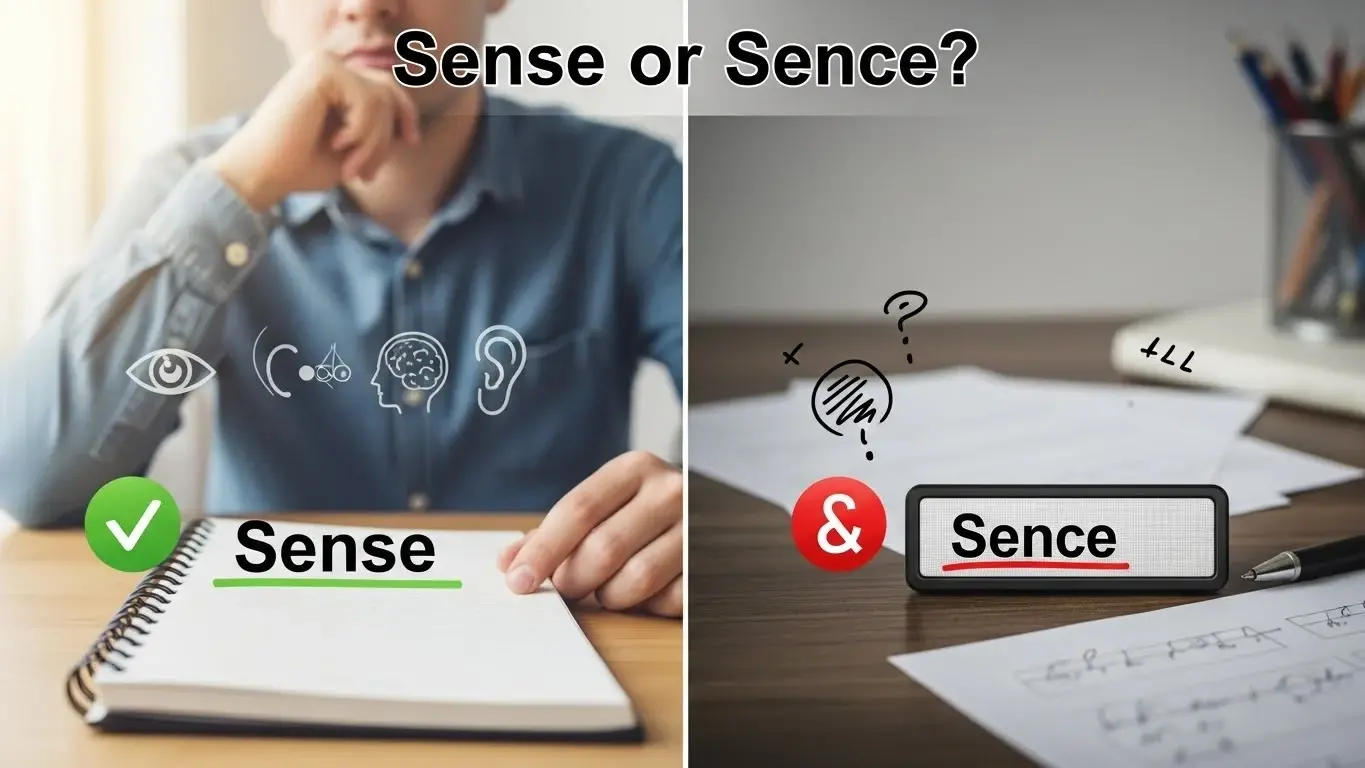
“Sense” is the correct spelling and means meaning, understanding, or perception, while “sence” is an incorrect spelling and has no meaning in standard English.
Spellcheck may catch it, but not always. This creates confusion in school work, emails, blogs, and professional writing.
The main problem is simple. One spelling is correct English, and the other is not a real word. Still, people keep asking about it because English pronunciation does not always match spelling. The word sense sounds soft, so some writers think adding a “c” makes sense. It does not.
This confusion is common among students, non-native speakers, and even fluent writers.
Using the wrong spelling can make writing look careless or unprofessional. In exams, job emails, or online content, this small mistake can lower trust.
This article gives a clear answer to sense or sence. You will learn which spelling is correct, why the mistake happens, common errors, real examples, and how to avoid confusion forever.
Sense or Sence – Quick Answer
✅ Sense is the correct spelling.
❌ Sence is incorrect and not a real English word.
Examples:
This idea makes sense.
She has a strong sense of smell.
The Origin of Sense or Sence
The word sense comes from the Latin word sensus, which means “feeling,” “thought,” or “meaning.” It entered English through Old French and has been used for hundreds of years.
The spelling sence has no historical origin in English. It is simply a misspelling caused by pronunciation confusion. English has many words where “c” and “s” sounds overlap, which leads to mistakes like this.
Because sense is a core English word with deep roots, its spelling never changed. Sence never existed as a correct form.
British English vs American English Spelling
There is no spelling difference between British and American English.
| Word | American English | British English |
| sense | Correct | Correct |
| sence | Incorrect | Incorrect |
Both regions use sense only.
Which Spelling Should You Use?
Always use sense.
Use sense when talking about:
- Meaning
- Logic
- Feelings
- Awareness
- The five senses
Audience advice:
- US audience: Use sense
- UK/Commonwealth: Use sense
- Global English: Use sense only
There is no situation where sence is correct.
Common Mistakes with Sense or Sence
❌ This doesn’t make sence.
✅ This doesn’t make sense.
❌ He has good sence of humor.
✅ He has a good sense of humor.
❌ Thinking sence is informal spelling
✅ It is always wrong
❌ Confusing with words like science
✅ Sense is different
Sense or Sence in Everyday Examples
Emails:
Your explanation makes sense.
This plan makes sense to me.
News:
The decision makes economic sense.
People lost their sense of safety.
Social media:
That makes sense now.
I can sense the change.
Formal writing:
The argument lacks logical sense.
Human sense perception is complex.
Sense or Sence – Google Trends & Usage Data
Search data shows:
- Sense is searched millions of times monthly
- Sence appears mainly as a spelling mistake
By context:
- Education → sense
- Writing help → sense or sence
- Grammar checks → sense
The trend proves sense is the only accepted spelling.
Sense vs Sence Comparison Table
| Feature | Sense | Sence |
| Correct spelling | Yes | No |
| Real English word | Yes | No |
| Used in exams | Yes | No |
| Used in writing | Yes | No |
| Dictionary entry | Yes | No |
FAQs About Sense or Sence
1. Is “sence” ever correct?
No. It is always wrong.
2. Why do people spell sense as sence?
Because of pronunciation confusion.
3. Is sense a noun or verb?
It can be both.
4. Does British English use sence?
No. Never.
5. Can spellcheck miss this error?
Sometimes, yes.
6. How can I remember the correct spelling?
Sense has no “c” in the middle.
7. Is sense related to science?
No. They are different words.
Conclusion
The answer to sense or sence is very clear. Sense is the correct and only correct spelling. Sence is a spelling error and should never be used in formal or informal writing.
This mistake happens because English spelling does not always match sound. However, once you learn the rule, the confusion ends. Every meaning—logic, feeling, awareness, or understanding—uses the word sense.
There is no British or American difference here. Global English follows the same rule. Using the correct spelling improves clarity, trust, and professionalism in your writing.
If you ever feel unsure, remember this simple rule: If you mean meaning or understanding, the word is always sense.
Learn about:
Spinned or Spun: Which One Is Correct ?(2026)

Oliver Lexon focuses on English vocabulary clarity and usage accuracy. His writing breaks down confusing word pairs and grammar topics into simple explanations with real-life examples, making English easier for non-native speakers.