

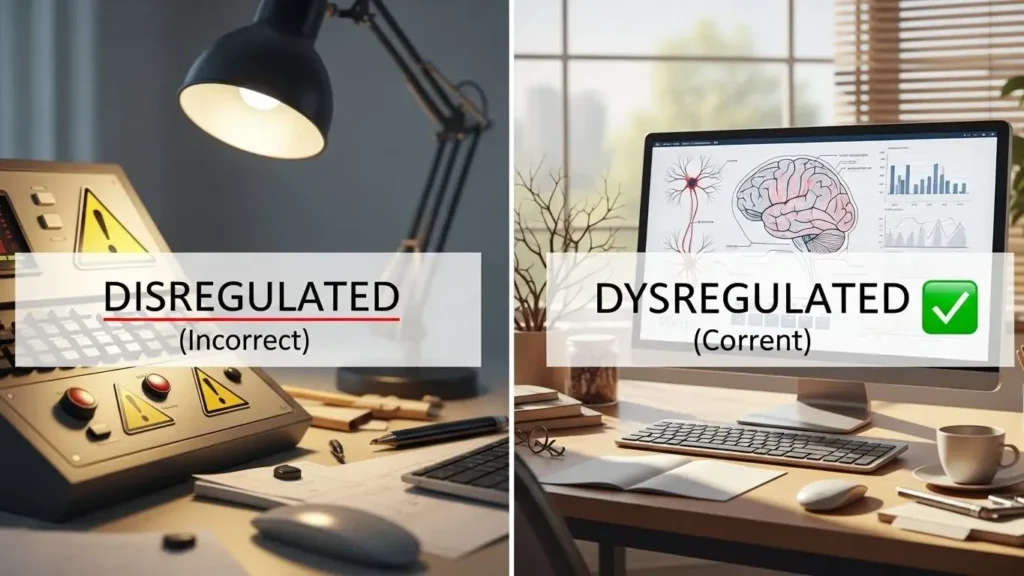
“Dysregulated” is the correct and accepted spelling. It describes a system—emotional or physical—that is not working in a balanced or controlled way. This term is commonly used in psychology and medicine, such as in “dysregulated emotions” or “dysregulated metabolism,” while “disregulated” is only a frequent misspelling and should be avoided.
Have you ever typed “disregulated” and seen a red underline? Or read “dysregulated” in a psychology article and paused for a second?
You are not alone.
Many people search for dysregulated or disregulated because both words look similar and sound almost the same. This confusion is very common in fields like psychology, education, and medical writing.
The real issue comes from prefixes. The words “dys-” and “dis-” look alike but have very different meanings. One small letter can completely change the meaning of a word.
This matters more than it seems. Using the wrong spelling in essays, blogs, or professional writing can reduce clarity and credibility.
In this guide, you will learn:
- the correct spelling
- simple meaning
- real-life usage
- psychology explanation
- and easy tricks to remember it
By the end, you will never confuse these words again.
Dysregulated or Disregulated – Quick Answer
- ✅ Dysregulated → Correct
- ❌ Disregulated / Disregulated → Incorrect
Meaning:
Dysregulated means not properly controlled or balanced.
Examples:
- Stress can cause a dysregulated nervous system
- The child shows dysregulated emotions
Dysregulate Meaning:
To disturb or impair proper balance.
The Origin of Dysregulated or Disregulated
The word comes from:
- dys- (Greek) → bad, abnormal, impaired
- regulated → controlled
So the meaning becomes:
👉 not working properly
Examples of similar words:
- dysfunction
- dyslexia
- dysphoria
Why do people write disregulated?
- confusion with “dis-”
- pronunciation similarity
- typing mistakes
But “disregulated” is not a valid word.
British English vs American English Spelling
There is no difference between UK and US English.
| Variant | British | American |
|---|---|---|
| Dysregulated | ✅ Yes | ✅ Yes |
| Disregulated | ❌ No | ❌ No |
This rule is based on meaning, not region.
Which Spelling Should You Use?
Always use:
- Dysregulated (US)
- Dysregulated (UK)
- Dysregulated (Global)
In psychology, medicine, and education, only this form is accepted.
Is “Disregulated” a Word? (Reality Check)
Let’s answer clearly:
❌ Not found in standard dictionaries
❌ Not used in academic writing
❌ Not accepted in professional fields
You may still see it in:
- blog mistakes
- student writing
- informal content
But in serious writing, it should never be used.
Why “Disregulated” Feels Correct (But Isn’t)
Your brain follows patterns like:
- dis + connect → disconnect
- dis + appear → disappear
So you think:
👉 dis + regulate → disregulated
Sounds logical, but English does not always follow simple patterns.
Here, the correct prefix is dys-, not dis-.
What Does Dysregulated Mean in Psychology?
In psychology, dysregulated means:
👉 difficulty controlling emotions or behavior
It describes a system that is trying to work, but failing.
Example:
- A person reacts strongly to small stress
- Someone cannot calm down easily
This is called emotional dysregulation.
Emotional Dysregulation Explained
Emotional dysregulation means:
- strong emotional reactions
- mood swings
- difficulty calming down
- emotional imbalance
Real-life Example
Situation: Someone gives feedback
Normal response:
“I understand, I will improve.”
Dysregulated response:
- feels attacked
- reacts emotionally
- stays stressed for hours
Dysregulated Nervous System (Simple Explanation)
Your body controls stress through the nervous system.
When it works well → you feel balanced
When it is dysregulated → you feel:
- anxious
- tired
- overwhelmed
- unable to relax
Think of it like:
👉 a car with broken controls
It cannot slow down properly
Dysregulated Behavior Examples
Here are real signs:
- getting angry over small issues
- feeling overwhelmed easily
- crying without clear reason
- reacting strongly to minor stress
These are common in:
- anxiety
- ADHD
- trauma
Dysregulated vs Deregulated (Important Difference)
Many people confuse these too.
| Word | Meaning |
|---|---|
| Dysregulated | Internal problem (not working properly) |
| Deregulated | External rules removed |
Simple Example:
- Dysregulated emotions → personal imbalance
- Deregulated market → no rules
Common Mistakes with Dysregulated vs Disregulated
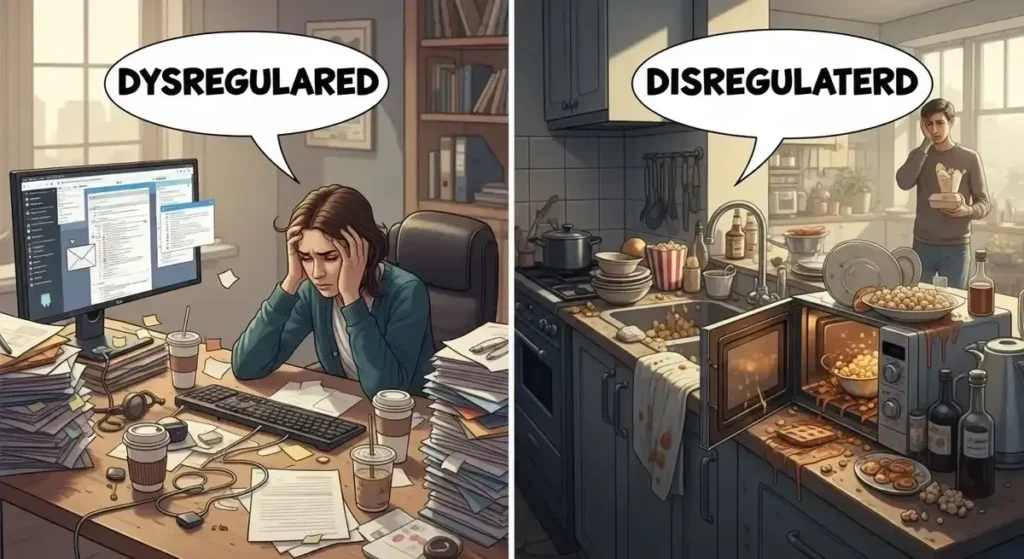
❌ The patient has a disregulated response
✅ The patient has a dysregulated response
❌ Disregulated emotions
✅ Dysregulated emotions
Tip:
If it relates to health or behavior → always use dys-
Dysregulated or Disregulated in Everyday Examples
Emails
The team became dysregulated under pressure.
News
Trauma can lead to a dysregulated nervous system.
Social Media
I feel emotionally dysregulated today.
Formal Writing
Chronic stress causes dysregulated behavior.
Dysregulated or Disregulated – Google Trends & Usage Data
People search this keyword because:
- spelling confusion
- similar pronunciation
- academic usage
Popular countries:
- USA
- UK
- India
- Pakistan
Usage context:
- psychology
- mental health
- education
- blogging
“Dysregulated” dominates
“Disregulated” appears as an error
Comparison Table: Dysregulated vs Disregulated
| Feature | Dysregulated | Disregulated |
|---|---|---|
| Correct | ✅ Yes | ❌ No |
| Dictionary | ✅ Yes | ❌ No |
| Medical use | ✅ Yes | ❌ No |
| Academic use | ✅ Yes | ❌ No |
Quick Practice (Test Yourself)
Fill in the blank:
“The child felt __ after stress.”
Answer: dysregulated
Key Takeaways
- Dysregulated is correct
- Disregulated is incorrect
- Dys = dysfunction
- Used in psychology and medicine
- Always use in formal writing
FAQs: Dysregulated or Disregulated
1. Is dysregulated a real word?
Yes, it is widely used in psychology and medicine.
2. Is disregulated a word?
No, it is a spelling mistake.
3. What does dysregulated mean?
It means not controlled or out of balance.
4. Why is dysregulated correct?
Because the prefix “dys-” means impaired or abnormal.
5. Is dysregulated used in UK English?
Yes, same spelling everywhere.
6. Can I use disregulated?
No, it is incorrect.
7. What is emotional dysregulation?
It is difficulty controlling emotions.
Conclusion
The confusion between dysregulated or disregulated is common, but the answer is simple. The correct word is always dysregulated.
This word comes from the prefix “dys-,” which means abnormal or impaired. That is why it is widely used in psychology, medicine, and scientific writing.
“Disregulated” may look correct, but it is not accepted in standard English. Using it can reduce the quality of your writing.
The best way to remember is simple:
👉 Dys = Dysfunction
If something is not working properly, it is dysregulated.
Once you understand this, you can write with confidence and avoid this mistake completely.