Many people search for “lightning or lightening” because these two words look almost the same but mean very different things.
One extra letter can completely change the meaning. This causes confusion in writing, schoolwork, weather reports, emails, and online posts.
You may see sentences like “The sky was full of lightening” and wonder if that is correct.
Or you might hesitate when writing about storms, electricity, or something becoming less heavy or less serious. Spellcheck does not always help because both words are correct English words.
The problem is simple: lightning and lightening sound similar, but they are used in different situations. One is about storms and electricity. The other is about making something lighter in color, weight, or mood.
This article clears the confusion step by step. You will learn the meanings, origins, common mistakes, and correct usage. By the end, you will know exactly when to use lightning and when to use lightening, without guessing.
Lightning or Lightening – Quick Answer
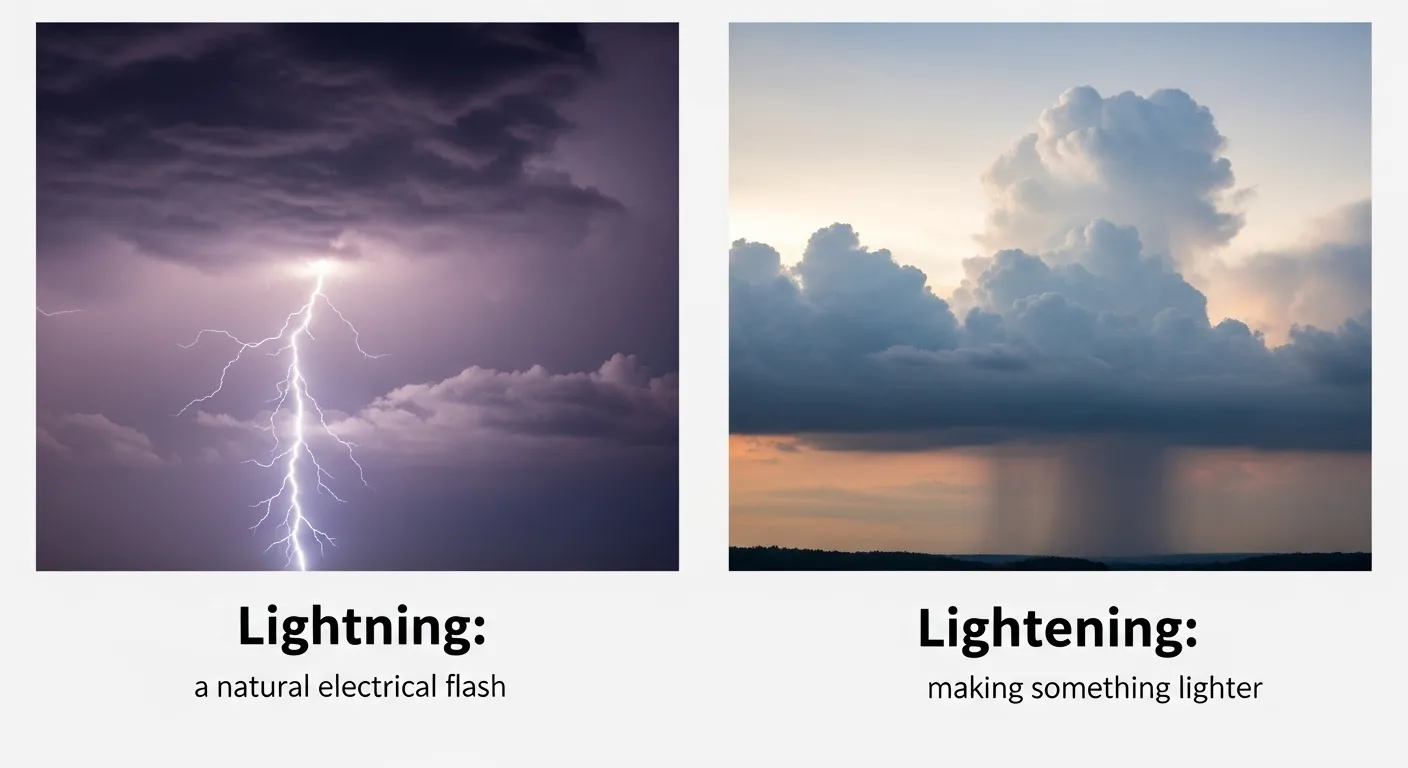
Lightning = a natural electric flash in the sky
Example: Lightning lit up the night sky.
Lightening = making something lighter (color, weight, or mood)
Example: She is lightening her hair.
Easy tip:
If it flashes in the sky → lightning
If something becomes lighter → lightening
The Origin of Lightning or Lightening
The word lightning comes from the Old English word lihting, meaning a flash of light. Over time, it became the word used for electrical flashes during storms.
The word lightening comes from the verb lighten. This verb means to make something lighter. The “-ing” form shows an action happening now.
So the difference exists because:
- Lightning is a noun (a thing)
- Lightening is a verb (an action)
They look similar because they share the same root word, light, but their meanings developed in different directions.
British English vs American English Spelling
There is no spelling difference between British and American English for these words. The rules and meanings are the same.
| Word | British English | American English |
| lightning | storm flash | storm flash |
| lightening | making lighter | making lighter |
| spelling | same | same |
| usage | same | same |
The confusion is global, not regional.
Which Spelling Should You Use?
Use lightning when:
- Talking about storms
- Talking about electricity
- Describing fast speed (figurative use)
Use lightening when:
- Something becomes lighter in color
- Something becomes less heavy
- A mood or situation improves
Audience advice:
- US: Same rule
- UK: Same rule
- Global writing: Same rule
Always check the meaning, not the sound.
Common Mistakes with Lightning or Lightening
❌ Writing lightening when talking about storms
✅ Use lightning
❌ Writing lightning when talking about hair color
✅ Use lightening
❌ Thinking one word is wrong
✅ Both words are correct
❌ Relying only on pronunciation
✅ Focus on meaning
❌ Spellcheck confusion
✅ Spellcheck won’t catch this mistake
Lightning or Lightening in Everyday Examples
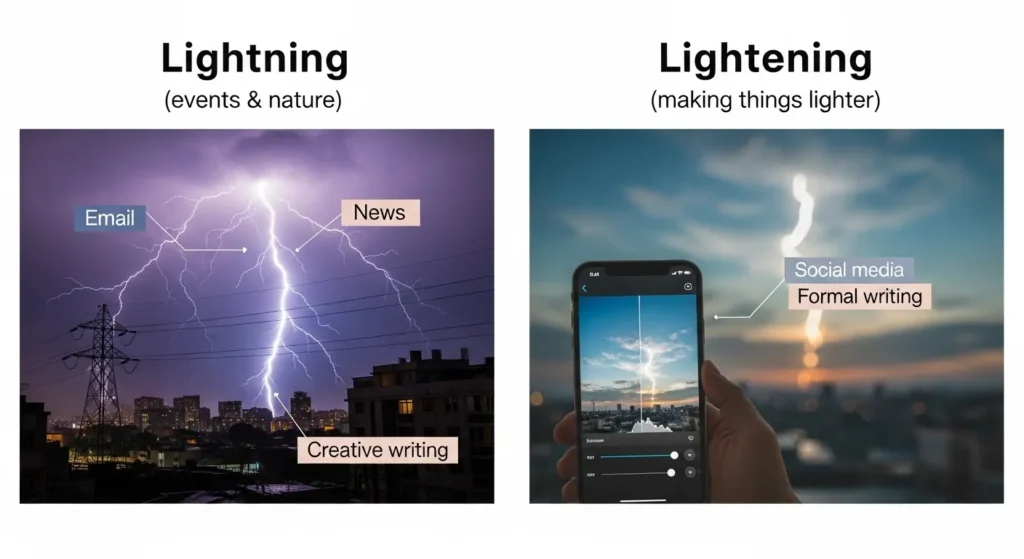
Email:
The lightning caused a power outage last night.
News:
Heavy rain and lightning hit the city.
Social media:
Trying a lightening filter on this photo!
Formal writing:
The procedure helps in lightening the workload.
Creative writing:
A flash of lightning split the dark sky.
Lightning or Lightening – Google Trends & Usage Data
Search trends show:
- Lightning is searched more often
- Weather news drives most searches
By context:
- Lightning → weather, sports teams, speed metaphors
- Lightening → beauty, fitness, mood, workload
By region:
- US, UK, and global searches follow the same pattern
Most spelling mistakes happen in weather-related writing.
Lightning vs Lightening: Comparison Table
| Feature | Lightning | Lightening |
| Part of speech | Noun | Verb |
| Meaning | Electric flash | Making lighter |
| Storm related | Yes | No |
| Action word | No | Yes |
| Common mistake | Extra “e” added | Missing “e” |
FAQs About Lightning or Lightening
1. Is lightening a real word?
Yes. It means making something lighter.
2. Is lightning always about storms?
Yes, in literal use.
3. Which word is more common?
Lightning.
4. Can lightening be used figuratively?
Yes, like lightening the mood.
5. Why do people confuse them?
They look and sound similar.
6. Does pronunciation change meaning?
No. Meaning decides spelling.
7. Can spellcheck catch the error?
Often no, because both are correct words.
Conclusion
The difference between lightning or lightening is small in spelling but big in meaning. Lightning refers to the powerful electric flash seen during storms. Lightening refers to the act of making something lighter, whether it is color, weight, or mood.
Many people make mistakes because the words look almost identical. Spellcheck does not always help, so understanding the meaning is key. If you are writing about weather or electricity, always choose lightning. If you are writing about change or improvement, choose lightening.
Once you remember this simple rule, you will avoid a very common English error. Clear word choice makes your writing more professional and easier to understand. With this guide, you can now use lightning or lightening correctly and confidently in all situations.
Learn more:
Seal or Seel: Which One Is Correct? (2026)

Evan L. Morwick is an English grammar writer and usage analyst.
He works in orthography, lexicography, and grammatography, focusing on common errors.
His articles explain spelling, word choice, and sentence clarity.
Evan helps learners write accurate, modern English.