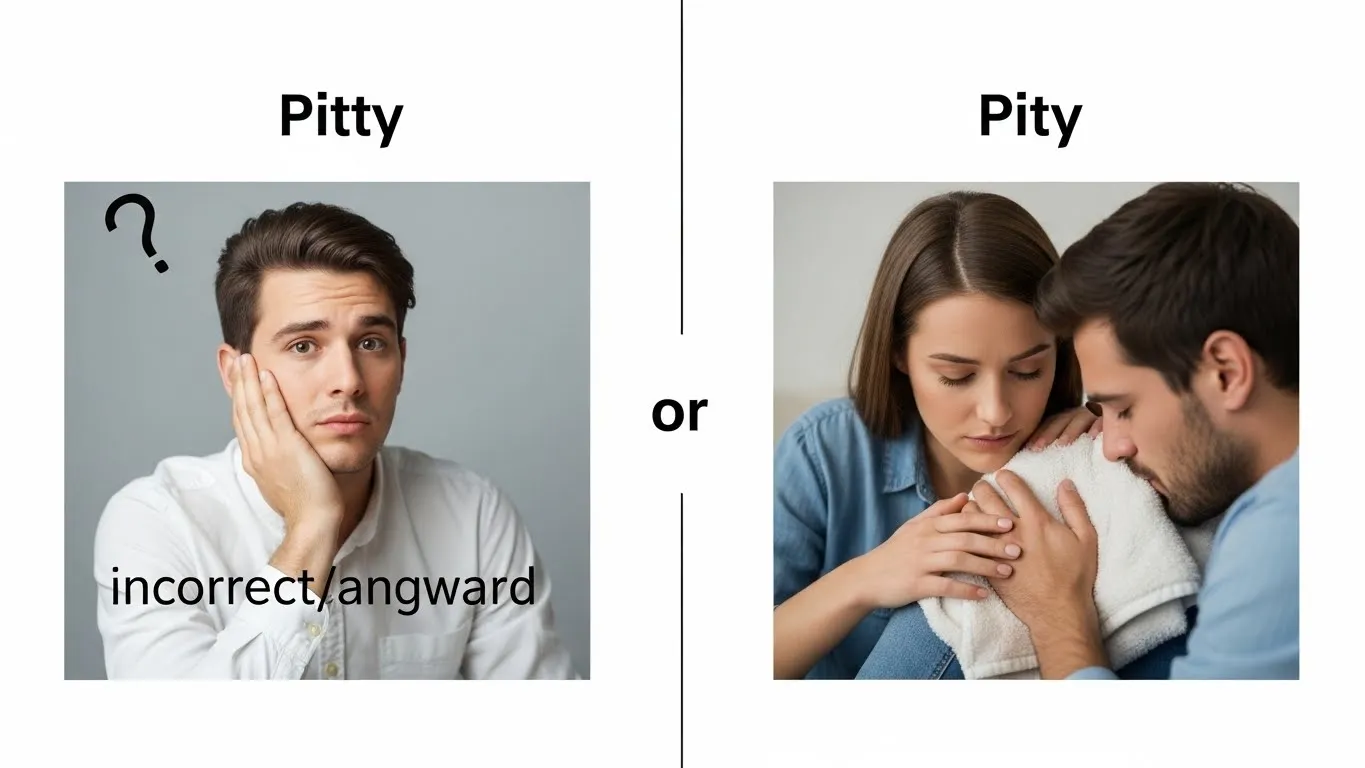
Many people write “pitty” when they actually mean “pity.” The correct word is pity. Pitty is a spelling mistake.
People search for pitty or pity, is it pitty or pity, and pity vs pitty because both words look similar and sound the same in fast speech.
This mistake is very common in exams, emails, essays, and social media posts. Spellcheck does not always help because people think pitty “looks right.”
This confusion can make writing look careless. For learners and even native speakers, choosing the wrong form can change how professional your message feels.
That is why people ask questions like “is pitty a misspelling of pity?”, “pitty or pity meaning,” and “is ‘I feel pity for you’ grammatically correct?”
This guide clears everything. You will get a quick answer, the word origin, British vs American usage, common mistakes, real-life examples, usage trends, a clear comparison table, and simple rules to remember. By the end, you will never confuse pitty or pity again.
Pitty or Pity – Quick Answer
Pity is correct.
Pitty is a misspelling of pity.
Examples:
- I feel pity for the poor family. ✅
- She looked at him with pity. ✅
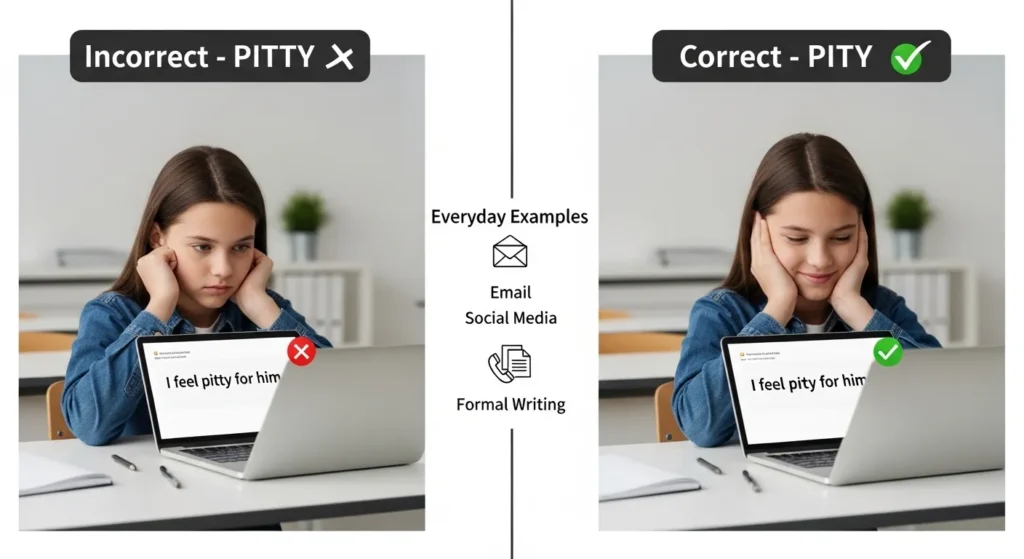
- I feel pitty for him. ❌
Rule:
If you mean sadness or sympathy → use pity, not pitty.
Pitty or Pity Meaning
- Pity (correct): A feeling of sadness, sympathy, or compassion for someone.
- Pitty (incorrect): No real meaning in standard English. It is just a spelling mistake.
The Origin of Pitty or Pity
The word pity comes from Old French pité, which came from Latin pietas. It meant kindness, mercy, and compassion. English adopted pity many centuries ago, and the spelling stayed stable.
The form pitty did not come from history or language change. It appears because people hear the short “i” sound and think it needs double “t,” like pretty or little. This is a natural spelling guess, but it is wrong.
So, there is no real spelling difference or evolution here.
Pitty is not an alternate spelling. Pity is the only correct form.
British English vs American English Spelling
There is no difference between British and American English for this word.
| Form | British English | American English | Correct |
|---|---|---|---|
| pity | pity | pity | ✅ Yes |
| pitty | pitty | pitty | ❌ No |
Both UK and US English accept pity and reject pitty.
Which Spelling Should You Use?
This choice is simple:
- US audience → use pity
- UK audience → use pity
- Commonwealth audience → use pity
- Global audience → use pity
There is no situation where pitty is correct in standard writing.
Common Mistakes with Pitty or Pity
❌ I feel pitty for him.
✅ I feel pity for him.
❌ It’s a pitty that we are late.
✅ It’s a pity that we are late.
❌ Pitty is another spelling of pity.
✅ No. Pitty is a misspelling of pity.
Tip to remember:
One “t” is enough → pity, like city.
Pitty or Pity in Everyday Examples
Emails:
- It is a pity we could not meet today.
News:
- Many people felt pity for the victims.
Social Media:
- Such a pity this event was canceled.
Formal Writing:
- The report shows pity toward displaced families.
Casual Writing:
- What a pity you missed the show.
Pitty or Pity – Google Trends & Usage Data
Search data shows that pity is used far more than pitty.
People usually search pitty or pity or is it pity or pitty when they are unsure about spelling.
In books, news articles, and academic writing, pity appears almost always.
Pitty appears mostly in typos, casual chats, and spelling checks.
This means pity is the standard and accepted form worldwide.
Pitty or Pity Comparison Table
| Feature | Pity | Pitty |
|---|---|---|
| Correct spelling | ✅ Yes | ❌ No |
| Has real meaning | ✅ Yes | ❌ No |
| Used in exams | ✅ Yes | ❌ No |
| Used in formal writing | ✅ Yes | ❌ No |
| Accepted in UK & US | ✅ Yes | ❌ No |
FAQs: Pitty or Pity
1. Is pitty a misspelling of pity?
Yes. Pitty is a common misspelling of pity.
2. Is it pitty or pity?
It is always pity.
3. Is “I feel pity for you” grammatically correct?
Yes. This sentence is correct and natural.
4. Pitty or pity meaning – are they different?
Only pity has meaning. Pitty has no meaning.
5. Pity vs pitty – which one is correct?
Only pity is correct in standard English.
6. Can pitty ever be correct?
No. Pitty is never correct in formal English.
7. How can I remember the correct spelling?
Remember: one “t” in pity, like city.
Conclusion
The confusion between pitty or pity is very common, but the solution is simple. Pity is the correct and only accepted spelling in modern English. It describes a feeling of sympathy, sadness, or compassion toward someone else’s suffering. You will see it in books, news articles, exams, and professional writing.
Pitty, on the other hand, is not a valid spelling. It comes from pronunciation habits and spelling guesses, not from English history or grammar rules. Using it can weaken your writing and create a poor impression, especially in formal or academic contexts.
To write with confidence, always choose pity. Remember the rule: one “t” is enough. Once you fix this habit, your writing will look clearer, more professional, and more accurate every time.
Learn more:
Systemic or Systematic: What’s the Difference ?

Lena Whitcroft is an English grammar specialist and language writer.
She focuses on spelling differences and sentence correctness.
Her articles are designed for global English learners.
Lena believes clear grammar leads to clear communication.