Many people search for “woke or not” because the word woke has more than one meaning today.
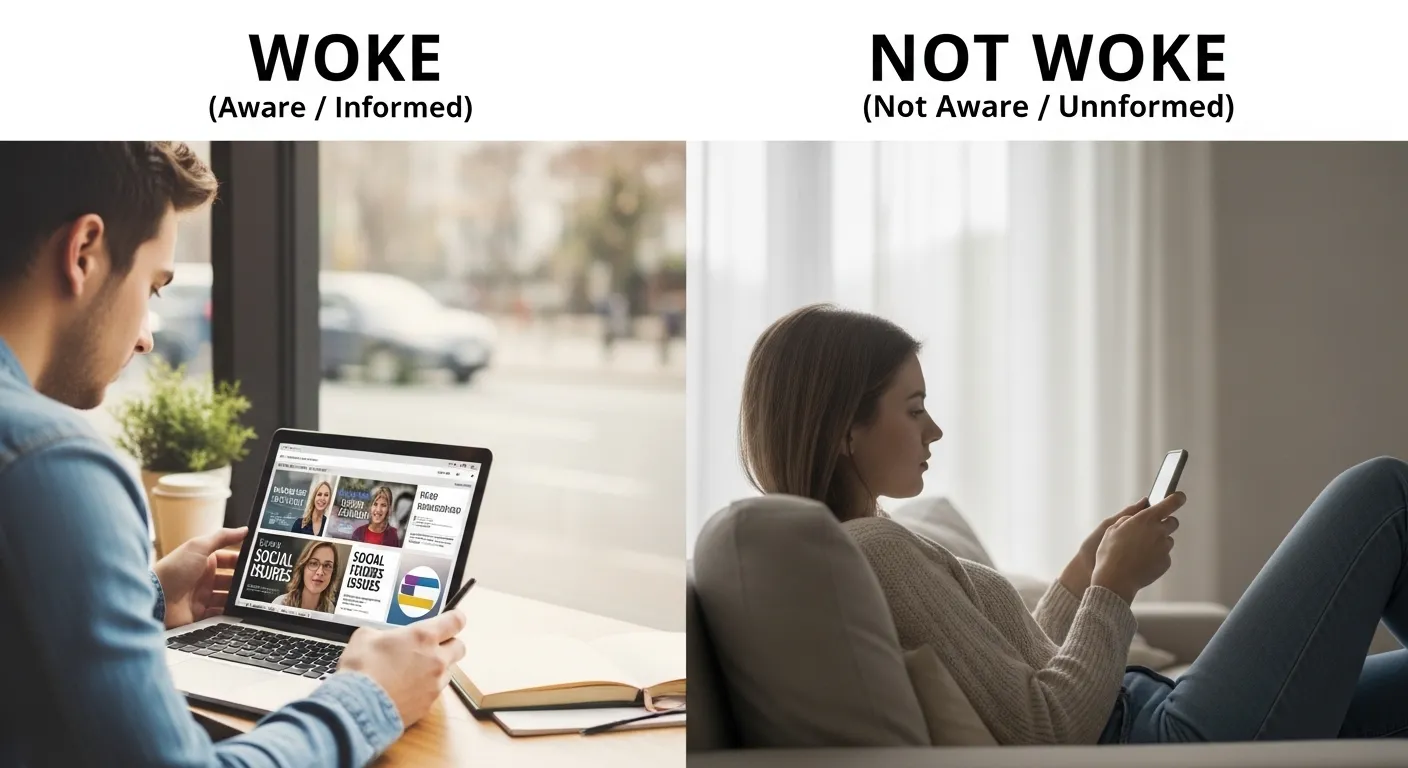
“Woke” can mean either “awake” (past tense of wake) or “socially aware,” while “not woke” simply means not aware or not supportive of modern social issues.
This phrase appears a lot on social media, in news headlines, and in daily talk, but its meaning often feels unclear.
The confusion happens because woke changed over time. It began as a normal grammar form of wake. Later, it became slang.
Today, it is often linked to social and political awareness. Because of this, the same word can feel positive, negative, or neutral based on context.
People from many backgrounds search for woke or not to avoid sounding rude, unclear, or outdated.
Writers, students, and readers want to know which meaning fits their sentence. Some think woke only means “awake.” Others think it only means “political.”
This article clears the confusion in simple words. You will get a quick answer first. Then you will learn the origin of the word, how British and American English use it, common mistakes, real-life examples, and clear rules. By the end, you will use woke or not with confidence.
Woke or Not – Quick Answer
Woke has two main meanings:
- Past tense of wake (physically awake)
- Aware of social issues (modern slang)
Not woke means:
- Not awake (literal)
- Not socially aware (modern usage)
Examples:
- I woke up early today.
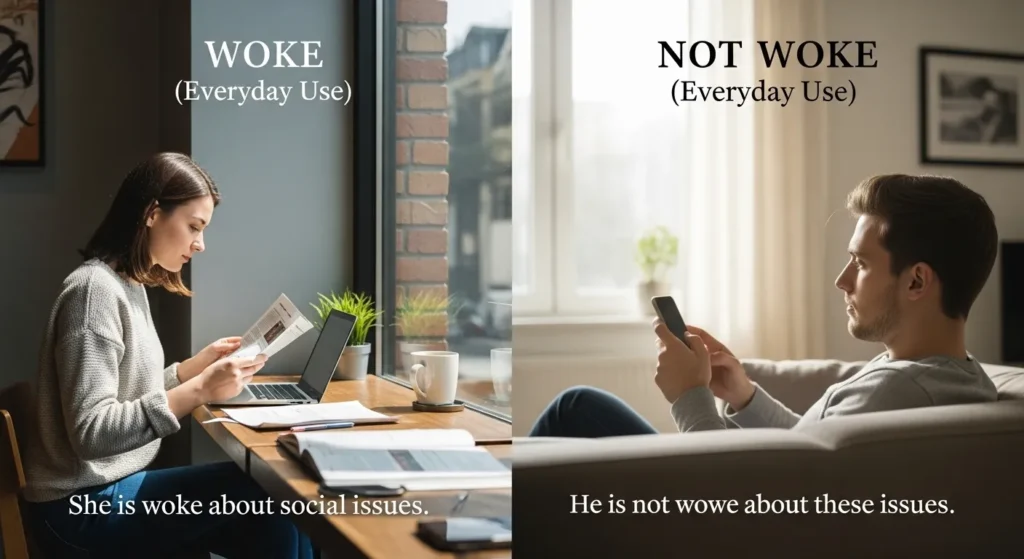
- She is very woke about social issues.
- He is not woke to these problems.
The Origin of Woke or Not
The word woke comes from Old English wacan, meaning to wake up. For many years, it was only used as the past tense of wake.
Later, in African American English, woke began to mean aware or alert. It was used to describe people who were aware of social injustice. Over time, this meaning spread into mainstream English.
The phrase “woke or not” became popular as a way to compare:
- awareness vs ignorance
- alertness vs unawareness
The confusion exists because one word now has two very different meanings.
British English vs American English Spelling
There is no spelling difference between British and American English.
| Term | British English | American English |
| woke | same spelling | same spelling |
| not woke | same spelling | same spelling |
The difference is mostly in usage and tone, not spelling.
Which Spelling Should You Use?
This is not about spelling. It is about meaning and context.
Use “woke” when:
- Talking about waking up
- Talking about social awareness
Use “not woke” when:
- Saying someone is unaware
- Making a comparison
Audience advice:
- US audience: Social meaning is very common
- UK/Commonwealth: Both meanings understood
- Global audience: Context is very important
If your sentence is unclear, add extra words to explain your meaning.
Common Mistakes with Woke or Not
❌ I am woke after a long day
✅ I woke up after a long day
❌ He is not woke at 6 a.m.
✅ He is not awake at 6 a.m.
❌ She woke about social issues
✅ She is woke about social issues
❌ The baby is woke
✅ The baby woke up
Main mistake:
Mixing grammar (verb) with slang (adjective).
Woke or Not in Everyday Examples
Email:
I woke up late this morning.
News:
Many young voters are considered woke.
Social media:
Stay woke, stay kind.
Office chat:
He is not woke to company culture issues.
Formal writing:
The movement encouraged people to remain woke to inequality.
Woke or Not – Google Trends & Usage Data
Google Trends shows:
- Searches for “woke meaning” increased sharply after 2015
- “woke or not” is often searched with social topics
- Literal meaning is searched less than slang meaning
By country:
- USA: Mostly social meaning
- UK: Mixed usage
- Global: Context-based searches
This shows users want clarity about meaning, not spelling.
Woke vs Not Woke: Comparison Table
| Term | Meaning | Usage |
| woke | aware or awake | slang / verb |
| not woke | unaware | comparison |
FAQs About Woke or Not
1. Is woke a real English word?
Yes. It is both a verb form and slang.
2. Does woke always mean political?
No. It means aware, but context matters.
3. Can woke be used formally?
Rarely. It is mostly informal.
4. Is not woke negative?
It depends on context and tone.
5. Is woke used the same worldwide?
No. Meaning changes by culture.
6. Should I avoid using woke in writing?
Use it carefully and clearly.
7. Is woke the same as awake?
No. Awake is physical. Woke is often social.
Conclusion
The phrase woke or not can be confusing because the word woke has changed over time. It started as a simple verb meaning woke up. Today, it also means being aware of social issues. Because of this, one word now carries two meanings.
To avoid mistakes, always check context. If you mean sleep, use wake or awake. If you mean awareness, woke can work, but it is informal. The phrase not woke is often used to compare awareness, not sleep.
Clear writing depends on clear meaning. When in doubt, explain your idea with extra words. That way, your message stays simple, clear, and easy to understand for any audience.
Learn more related article :
Decore or Decor: Which Spelling Is Correct ?
Seal or Seel: Which One Is Correct? (2026)

Evan L. Morwick is an English grammar writer and usage analyst.
He works in orthography, lexicography, and grammatography, focusing on common errors.
His articles explain spelling, word choice, and sentence clarity.
Evan helps learners write accurate, modern English.