

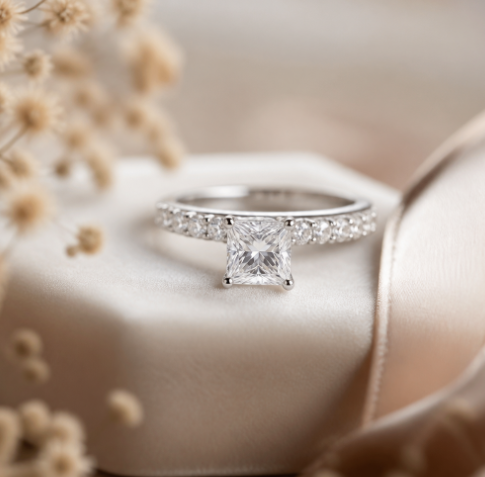
Few gemstone cuts have captured the imagination of jewelry lovers quite like the princess cut. Sharp corners, brilliant faceting, and a contemporary silhouette make it one of the most sought-after diamond shapes in the world. Whether you are shopping for an engagement ring, a milestone gift, or a personal indulgence, understanding the nuances of this cut is essential before making a purchase. This guide walks you through everything you need to know — from the geometry of the stone to the financial decisions that surround buying fine jewelry.
What Defines a Princess Cut Diamond?
The princess cut is a square or rectangular modified brilliant cut, typically featuring between 57 and 76 facets depending on the cutter’s technique. It was developed in the 1960s and refined throughout the 1980s, eventually becoming the second most popular diamond shape after the round brilliant. Its defining characteristic is the inverted pyramid structure — when viewed from the side, the stone tapers downward to a point, which means the crown appears smaller than the actual carat weight suggests. This structural quirk is both an advantage and a consideration for buyers who prioritize visual size.
The Geometry Behind the Brilliance
Unlike round brilliants, which are cut to maximize light return through a standardized formula, princess cuts allow for more creative latitude. The chevron-shaped facets on the pavilion create a distinctive cross or windmill pattern when viewed from above under magnification. This pattern influences how light disperses through the stone, producing a fiery, high-contrast sparkle that many buyers find more dramatic than the softer glow of oval or cushion cuts. The depth percentage typically ranges between 65% and 75%, and buyers should pay close attention to this figure when comparing stones of similar carat weight.
Pros and Cons Worth Knowing Before You Buy
Princess Cut Diamonds offer a compelling combination of modern aesthetics and practical value. Because the princess cut retains more of the rough diamond during the cutting process compared to round brilliants, cutters can produce a larger finished stone from the same raw material. This efficiency often translates into a lower price per carat — sometimes 20 to 30 percent less than a comparable round stone. However, the four pointed corners are structurally vulnerable and prone to chipping if the setting does not protect them adequately. Prong placement at each corner is not just a stylistic choice; it is a functional necessity that directly affects the longevity of the stone.
Color and Clarity Considerations
The princess cut’s facet structure tends to concentrate color in the corners of the stone, which means color grades matter more here than in some other cuts. A stone graded H or I on the GIA color scale may show a faint yellow tint in the corners that would be less noticeable in a round brilliant of the same grade. For this reason, many gemologists recommend staying within the D to G color range for princess cuts set in white gold or platinum. Yellow gold settings, on the other hand, can mask slight warmth in the stone and allow buyers to select a lower color grade without sacrificing visual appeal.
Setting Styles That Complement the Princess Cut
The geometric precision of a princess cut pairs naturally with clean, architectural settings. Channel-set side stones echo the linear quality of the center stone, while bezel settings offer a sleek, protective frame that suits minimalist tastes. Four-prong settings remain the most popular choice because they expose the maximum amount of the stone’s surface area to light while securing the vulnerable corners. Cathedral and solitaire designs elevate the stone above the band, enhancing its visual presence and allowing light to enter from multiple angles. Halo settings, while traditionally associated with round stones, can be adapted for princess cuts using square-shaped accent diamonds to maintain geometric consistency.
Metal Choices and Their Impact on Appearance
Platinum and white gold are the most common metal choices for princess cut engagement rings, and for good reason. The cool, neutral tones of these metals allow the diamond’s natural color to read as accurately as possible. Rose gold has gained significant popularity in recent years and creates a romantic contrast against the sharp lines of the princess cut. Yellow gold, as mentioned, can be a strategic choice for buyers working with a tighter budget who want to maximize the visual quality of their stone without moving up in color grade.
Lab-Grown vs. Natural Princess Cut Diamonds
The conversation around diamond sourcing has shifted dramatically over the past decade. Lab-grown diamonds are chemically and optically identical to mined stones, and they are available in the princess cut at significantly lower price points. For buyers who prioritize size and clarity over provenance, lab-grown options can be an attractive alternative. If you are exploring the full range of options available today, this comprehensive guide to buying lab-grown diamonds from Elle covers reputable retailers and what to look for when shopping in this growing category.
Protecting Your Investment: Insurance and Certification
Purchasing a diamond is a significant financial commitment, and protecting that investment requires more than a secure setting. GIA or AGS certification provides an objective, third-party assessment of the stone’s cut, color, clarity, and carat weight — documentation that is essential for insurance purposes and future resale. Jewelry insurance is a category that many buyers overlook until it is too late. Understanding the difference between coverage types, deductibles, and appraisal requirements is critical. If you are unfamiliar with the terminology involved, reviewing a resource that clarifies ensurance or insurance terminology can help you navigate policy language with greater confidence before speaking with a provider.
Leon Diamond: A Trusted Source for Princess Cut Expertise
When it comes to sourcing a princess cut diamond with confidence, working with a jeweler who specializes in this shape makes a meaningful difference. Leon Diamond has built a reputation for transparency, craftsmanship, and personalized service. Their team provides detailed guidance on cut quality, setting options, and stone selection, helping buyers make informed decisions rather than impulsive ones. For those who want to explore the full range of princess cut options — from classic solitaires to custom halo designs — Leon Diamond offers both in-store consultations and an extensive online resource library that addresses the specific questions buyers encounter at every stage of the process.
Final Thoughts
The princess cut remains one of the most versatile and visually striking diamond shapes available. Its combination of geometric elegance, brilliant light performance, and relative value efficiency makes it a strong choice for a wide range of buyers. However, like any significant purchase, success depends on doing the research, asking the right questions, and working with professionals who prioritize education over salesmanship. Whether you are drawn to the cut’s modern lines, its fire and contrast, or simply its timeless appeal, approaching the process with knowledge and patience will ensure the stone you choose is one you will treasure for decades.