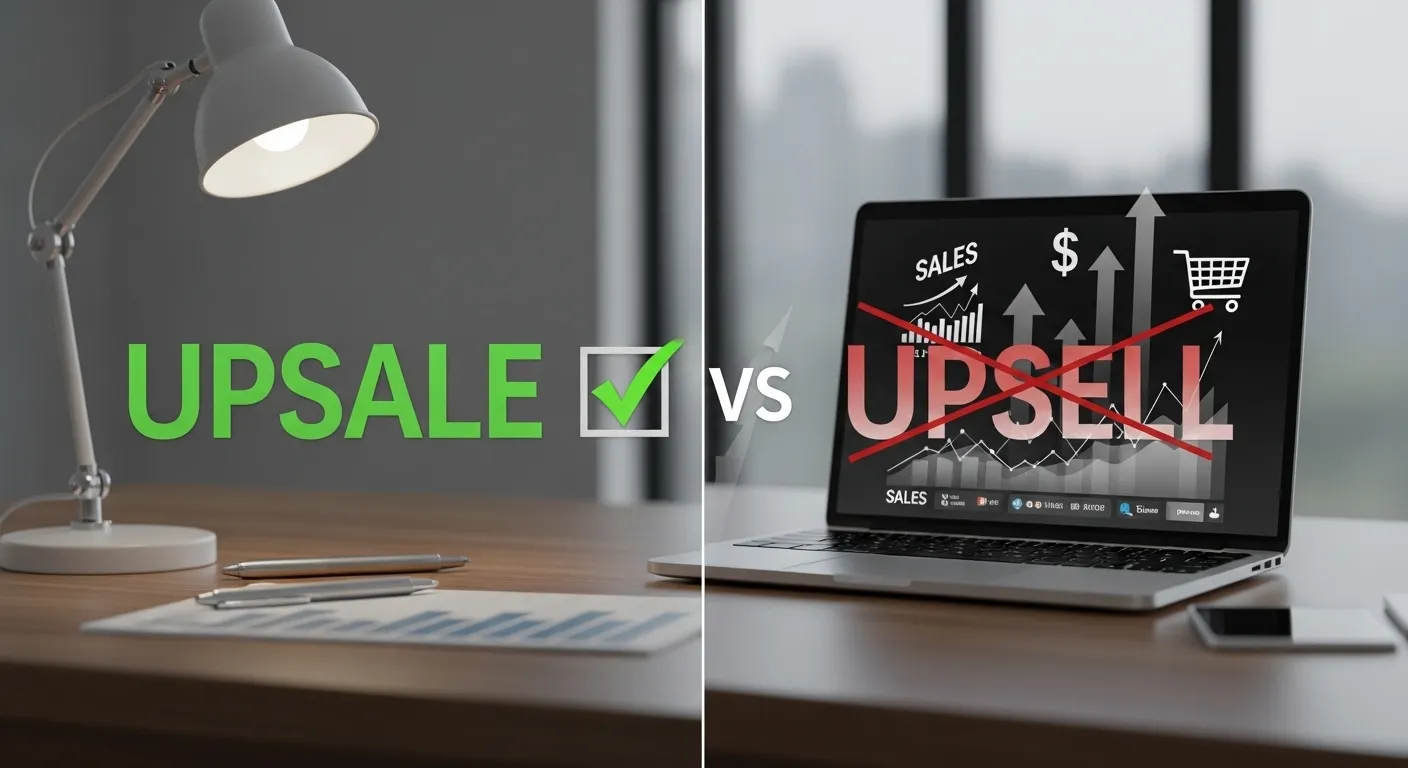
Many people working in sales, marketing, and e-commerce often wonder about the correct word: upsale or upsell. The correct and widely accepted term is upsell, while upsale is considered incorrect in standard English.
You may still see both forms used online, in emails, or inside business tools, which is why this confusion keeps coming up.
People search for upsale or upsell because they want to know which word is professional and safe to use in business communication.
The confusion mostly comes from how English forms nouns from verbs. Since we have words like resale or wholesale, many assume upsale must also be correct.
Others hear the word spoken and spell it the way it sounds. Over time, this leads to mixed usage, especially in informal writing or internal business communication.
Using the wrong term can affect clarity and credibility. In professional sales copy, emails, reports, or software documentation, word choice matters. A small spelling mistake can make your content look less trustworthy.
This article clears the confusion once and for all. You will learn the correct term, its origin, how British and American English treat it, common mistakes, and how to use it correctly in real-life situations.
Upsale or Upsell – Quick Answer
✅ Upsell is the correct and accepted word
❌ Upsale is incorrect in standard English
Examples:
The company trained staff to upsell premium plans.
Upselling increases average order value.
❌ The company trained staff to upsale products. (wrong)
Meaning of Upsell or Upsale
Upsell means encouraging a customer to buy a more expensive, upgraded, or additional product.
Upsale is not standard English and is considered incorrect in professional writing.
Example:
👉 The salesperson tried to upsell a premium subscription.
Rule:
Always use upsell as a verb or noun.
The Origin of Upsale or Upsell
The word upsell comes from the verb sell, combined with the prefix up, meaning “more” or “higher.” It appeared in business and sales language in the mid-20th century.
Upsell means:
- To encourage a customer to buy a more expensive option
- To add upgrades, add-ons, or premium features
The term upsale does not have a real historical foundation in English. It looks logical, but English does not form this word naturally. Unlike resale, upsell is based on an action, not a category of sale.
Because English spelling is not always logical, people assume upsale is correct. However, dictionaries and professional style guides only recognize upsell.
British English vs American English Spelling
There is no spelling difference between British and American English for this term.
| Feature | British English | American English |
| upsell | Correct | Correct |
| upsale | Incorrect | Incorrect |
Both systems use upsell only.
Which Spelling Should You Use?
You should always use “upsell.”
Use upsell when:
- Writing marketing copy
- Creating product descriptions
- Sending sales emails
- Writing reports or case studies
- Building SaaS or e-commerce content
Audience-based advice:
- US audience: upsell
- UK/Commonwealth audience: upsell
- Global audience: upsell
There is no professional context where upsale is safer or more accepted.
Common Mistakes with Upsale or Upsell
❌ Writing upsale because it looks logical
✅ Use upsell
❌ Treating upsale as a noun form
✅ Upsell works as both noun and verb
❌ Using upsale in business emails
✅ Always use upsell
❌ Ignoring brand or style guides
✅ Most guides clearly recommend upsell
Upsale or Upsell in Everyday Examples
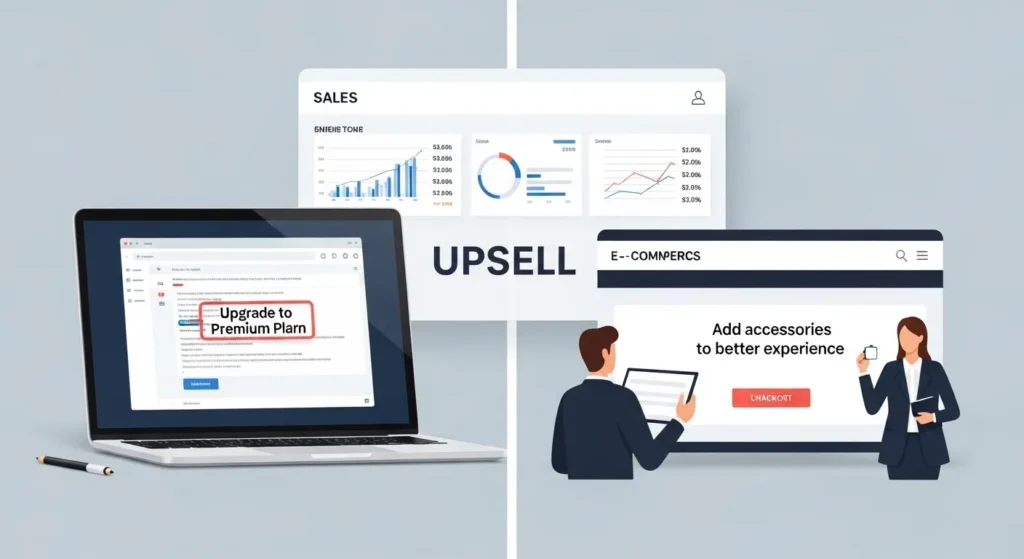
Email:
Our team will upsell premium support plans.
Marketing:
Upselling can increase customer lifetime value.
E-commerce:
This page shows upsell products at checkout.
Formal writing:
The upsell strategy improved overall revenue.
Social media:
Smart upsell ideas boost profits fast 🚀
Upsale or Upsell – Google Trends & Usage Data
Search data shows:
- Upsell is searched far more often than upsale
- Searches for upsale usually include “correct spelling” or “vs upsell”
By country:
- High interest in the US, UK, India, Canada, and Australia
Context of searches:
- Digital marketing
- Shopify and e-commerce
- SaaS growth
- Sales training
This shows that users want clarity and correct professional usage.
Upsale vs Upsell: Comparison Table
| Feature | Upsell | Upsale |
| Correct spelling | ✅ Yes | ❌ No |
| Dictionary accepted | Yes | No |
| Professional usage | Yes | No |
| Verb form | Yes | No |
| Noun form | Yes | No |
| Used in marketing | Very common | Rare / incorrect |
FAQs About Upsale or Upsell
1. Is upsale a real word?
No, it is not standard English.
2. Why do people use upsale?
Because it looks logical and sounds similar.
3. Is upsell a noun or a verb?
It can be both.
4. Do dictionaries accept upsale?
No.
5. Is upsell used in British English?
Yes, it is standard.
6. Can I use upsell in formal writing?
Yes, it is widely accepted.
7. What is an upsell example?
Offering a premium version of a product.
Conclusion
The confusion between upsale vs upsell is common, especially in sales and marketing environments. While upsale may look correct at first glance, it is not accepted in standard English. It appears mainly because of spelling assumptions and informal usage.
Upsell is the correct word. It is recognized by dictionaries, used globally, and accepted in professional writing. Whether you are writing an email, creating a landing page, or preparing a sales strategy, upsell is always the right choice.
To avoid mistakes, remember this simple rule: if the word comes from sell, then the correct form is upsell. Using the correct spelling improves clarity, professionalism, and trust in your communication.
Learn more:
Decore or Decor: Which Spelling Is Correct ?

Evan L. Morwick is an English grammar writer and usage analyst.
He works in orthography, lexicography, and grammatography, focusing on common errors.
His articles explain spelling, word choice, and sentence clarity.
Evan helps learners write accurate, modern English.