

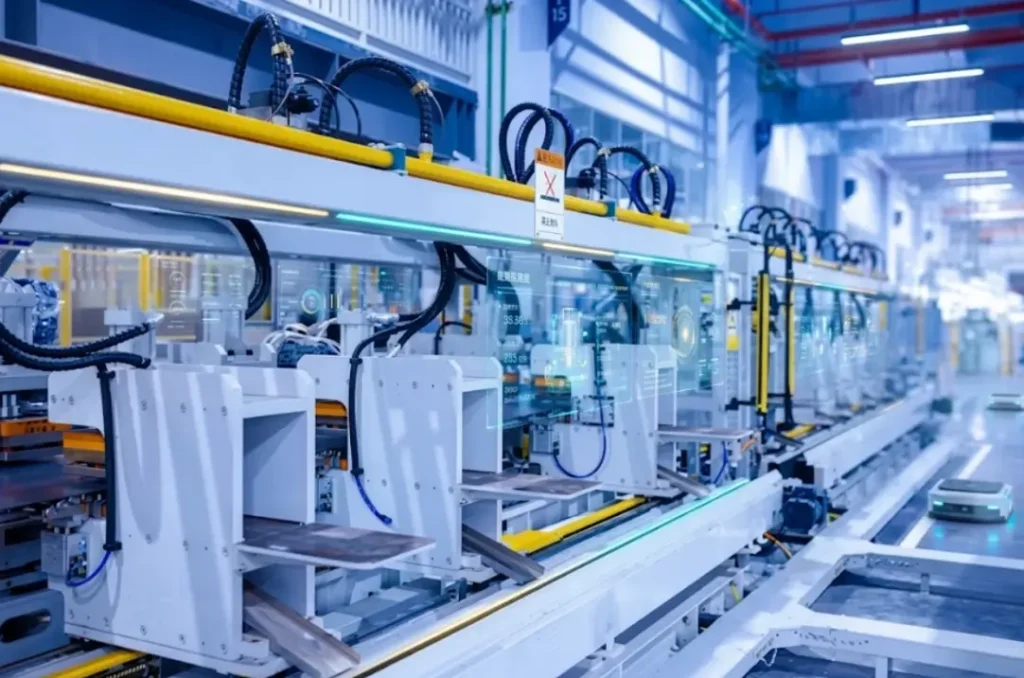
The Evolution of Flexible Packaging Manufacturing
Traditional packaging lines were heavily reliant on manual intervention and disjointed processes. This often resulted in significant material waste and prolonged setup times. Today, the landscape demands agility and precision.
Intelligent production lines now integrate IoT sensors and automated workflows to meet the surging global demand for flexible packaging. To stay competitive, upgrading core manufacturing equipment is no longer optional—it is a strategic necessity.
When upgrading a production line, the choice of core equipment dictates overall efficiency, print precision, and material waste. Modern facilities rely heavily on specialized flexible printing and packaging machines to handle diverse materials—from laminated films to non-woven fabrics—with zero downtime.
For instance, industry-leading manufacturers like KETE Group provide integrated solutions that reduce operational bottlenecks, which is essential for brands trying to scale their packaging operations seamlessly.
Top 3 Technologies Driving the Packaging Industry Forward
High-Speed Flexographic and Rotogravure Printing
Recent advancements in flexographic (flexo) and rotogravure printing have dramatically improved output quality. Modern presses feature gearless designs and automated color-matching systems.
These innovations drastically reduce ink waste and ensure perfect print registration, even at speeds exceeding 400 meters per minute.
- Automated Registration: Eliminates manual adjustments, minimizing substrate waste during setup.
- Quick-Change Sleeves: Allows operators to switch print jobs in minutes rather than hours.
- Closed-Loop Ink Systems: Maintains consistent viscosity, cutting down on solvent emissions.
Automated Pouch and Bag Making Systems
The shift towards stand-up pouches and zipper bags requires highly adaptable machinery. Modern bag-making systems utilize advanced servo-motor technology to control tension and sealing with pinpoint accuracy.
By automating the folding, gusseting, and sealing stages, manufacturers can lower labor costs while achieving exponential capacity gains.
- High-Speed Sealing: Ensures leak-proof seams for food and liquid packaging.
- Multi-Format Flexibility: Easily switches between flat pouches, side-gusset bags, and stand-up formats.
- Reduced Labor Dependency: Requires only one operator to monitor the entire automated line.
Smart Quality Control and Inspection
Quality assurance is now driven by AI and machine vision algorithms. Instead of random manual checks, inline cameras inspect 100% of the web for micro-defects, color variations, and barcode legibility.
This real-time detection prevents thousands of meters of defective material from reaching the final customer. Integrating these systems with broader AI business tools allows managers to track production health remotely and predict maintenance needs before a breakdown occurs.
Evaluating the ROI of Upgrading Your Production Line
Investing in advanced machinery requires significant capital, but the Return on Investment (ROI) is realized quickly through operational efficiencies.
Modern systems reduce the consumption of expensive raw materials like barrier films, specialty papers, and foils. When integrating these upgrades into your enterprise budget and cost estimation strategies, the reduction in unplanned downtime often justifies the initial expenditure.
The Global Shift Towards Sustainable Packaging
The packaging industry in 2026 is fundamentally shaped by the demand for sustainability. Advanced machinery must now be highly compatible with eco-friendly materials, such as biodegradable films and water-based inks.
Running thinner gauge films or recyclable mono-materials requires extremely precise web tension control to prevent stretching or snapping.
Beyond machinery upgrades, the broader manufacturing trend is heavily shifting towards eco-friendly solutions. The transition to recyclable and biodegradable materials isn’t merely a consumer preference; it is rapidly becoming a regulatory requirement.
According to recent insights on packaging sustainability, adapting to these circular economy strategies can significantly lower long-term compliance costs and improve brand equity in a highly competitive global market.
Conclusion: Future-Proofing Your Packaging Strategy
The flexible packaging sector is moving faster than ever, driven by the dual forces of automation and sustainability. Relying on legacy equipment introduces hidden costs through material waste, slow changeovers, and excessive energy use.
Decision-makers must evaluate their current production bottlenecks and actively plan for technological integration. By investing in scalable, automated machinery today, manufacturers can secure their operational efficiency and market dominance for the next decade.