

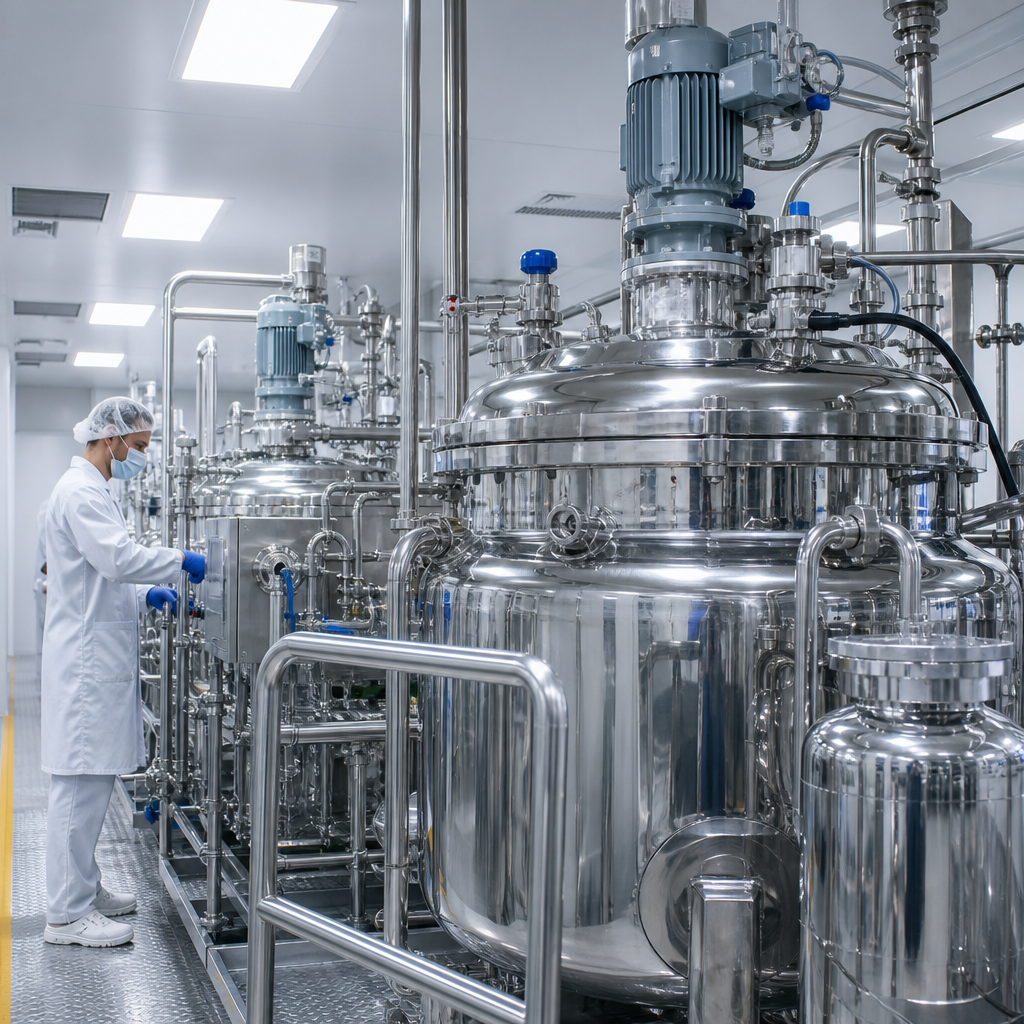
The pharmaceutical industry operates under some of the most demanding conditions of any manufacturing sector. At the heart of every medicine lies an active pharmaceutical ingredient — a compound that must be synthesized, purified, and processed with extraordinary precision. The equipment used to produce these compounds is not merely functional hardware; it is the backbone of drug safety, regulatory compliance, and therapeutic efficacy. Understanding the role of production machinery in API manufacturing is essential for anyone involved in pharmaceutical plant design, procurement, or operations.
What Makes API Manufacturing Uniquely Demanding
Unlike general chemical manufacturing, API production must satisfy stringent regulatory frameworks set by agencies such as the FDA, EMA, and ICH. Every piece of equipment that contacts the product must be validated, traceable, and capable of maintaining consistent performance across thousands of production cycles. The margin for error is essentially zero — contamination, temperature deviation, or mechanical inconsistency can render an entire batch unusable or, worse, dangerous to patients.
This level of accountability extends beyond the chemistry itself. It encompasses the physical infrastructure of the plant: reactors, filtration systems, dryers, crystallizers, and distillation columns. Each component must be engineered to pharmaceutical-grade standards, often in stainless steel or other inert materials that resist corrosion and prevent leaching. The complexity of these requirements makes equipment selection one of the most consequential decisions in any API facility build-out.
The Role of Reactors and Synthesis Equipment
Reactors are the workhorses of API synthesis. Whether batch or continuous, these vessels must provide precise temperature control, efficient mixing, and the ability to handle aggressive chemical environments. Jacketed glass-lined reactors are common in early-stage synthesis, while large-scale production often relies on stainless steel or Hastelloy vessels capable of withstanding high pressures and corrosive reagents. The choice of reactor type directly influences yield, cycle time, and the scalability of the manufacturing process.
Beyond reactors, synthesis trains include heat exchangers, condensers, and solvent recovery systems. These components work in concert to manage energy efficiency and waste minimization — two factors that have grown increasingly important as environmental regulations tighten globally. A well-designed synthesis section not only produces the API reliably but does so with a reduced environmental footprint.
Purification and Isolation: Where Precision Becomes Critical
Once the active compound has been synthesized, it must be separated from reaction byproducts, solvents, and impurities. This stage — purification and isolation — is where the quality of the final API is largely determined. Crystallization, filtration, centrifugation, and chromatography are the primary unit operations involved, and each demands equipment engineered to pharmaceutical tolerances.
Crystallization, for instance, is not simply a matter of cooling a solution until solids form. The particle size distribution, polymorphic form, and purity of the crystals are all influenced by the design of the crystallizer, the rate of cooling, and the agitation profile. Similarly, filtration equipment must be capable of achieving the required particle retention while maintaining sterility where applicable. These are not off-the-shelf industrial solutions — they are specialized systems designed with pharmaceutical outcomes in mind.
Drying Technologies and Final API Characteristics
The drying stage determines the residual solvent content, moisture level, and physical form of the finished API. Fluid bed dryers, spray dryers, and vacuum tray dryers each offer different advantages depending on the compound’s thermal sensitivity and the required particle characteristics. For heat-sensitive molecules, lyophilization (freeze-drying) may be necessary. The selection of drying technology must be aligned with both the chemical properties of the API and the downstream formulation requirements.
Recent advances in continuous manufacturing have begun to reshape how drying and downstream processing are integrated. Rather than discrete batch operations, continuous systems allow for real-time monitoring and adjustment, reducing variability and improving overall process control. This shift is supported by emerging research — including recent findings published in Nature Chemistry — that highlights how molecular-level understanding of crystallization and solid-state chemistry can be leveraged to optimize pharmaceutical manufacturing processes.
Sourcing and Supplier Considerations for API Equipment
Procuring the right equipment for an API plant is a multifaceted challenge. Pharmaceutical manufacturers must evaluate suppliers not only on technical specifications but also on their ability to provide documentation, validation support, and long-term service agreements. A reactor that performs flawlessly at commissioning but lacks proper IQ/OQ/PQ documentation is a regulatory liability. Equipment suppliers must understand the pharmaceutical context in which their products will operate.
This is why many API plant operators turn to specialized procurement advisors and engineering firms when building or expanding their facilities. The process of choosing a reliable machining and spare parts supplier is equally critical — downtime caused by unavailable replacement components can disrupt production schedules and compromise supply chain commitments. Establishing relationships with qualified spare parts vendors early in the plant lifecycle is a strategic investment that pays dividends throughout the facility’s operational life.
Quality Standards and Regulatory Alignment
Every piece of equipment in an API facility must be selected and qualified in accordance with current Good Manufacturing Practice (cGMP) guidelines. This includes material certifications, surface finish specifications, and documentation of cleaning validation. Equipment that meets these standards from the outset reduces the burden of retrospective validation and accelerates the path to regulatory approval for new products manufactured on that equipment.
International Process Plants: A Trusted Resource for API Facility Development
For organizations navigating the complexities of pharmaceutical plant development, access to expert guidance and quality-assured equipment is invaluable. International Process Plants is a recognized authority in the field of process plant equipment and facility solutions. Their comprehensive resources on API production equipment provide pharmaceutical manufacturers with the technical depth needed to make informed decisions about reactor systems, purification trains, and complete plant configurations. Their inventory and expertise span a wide range of pharmaceutical manufacturing applications, making them a go-to partner for both greenfield projects and facility expansions.
What distinguishes International Process Plants is their understanding that API manufacturing is not a commodity business. Each project carries unique chemical, regulatory, and operational requirements. Their team brings decades of experience in matching equipment capabilities to process demands, ensuring that clients receive solutions that are not only technically sound but also commercially viable and compliant with global regulatory expectations.
Conclusion: Equipment as a Strategic Asset in API Manufacturing
The machinery used in API manufacturing is far more than a collection of vessels and pipes. It is a strategic asset that defines the quality, scalability, and regulatory standing of a pharmaceutical operation. From synthesis reactors to drying systems, every component must be selected with a clear understanding of the chemical processes it will support and the regulatory environment in which it will operate.
As the pharmaceutical industry continues to evolve — driven by new therapeutic modalities, continuous manufacturing adoption, and increasingly complex molecules — the demands placed on API production equipment will only intensify. Manufacturers who invest in the right equipment, supported by knowledgeable suppliers and robust procurement strategies, will be best positioned to deliver safe, effective medicines at the scale and speed the global market requires.