

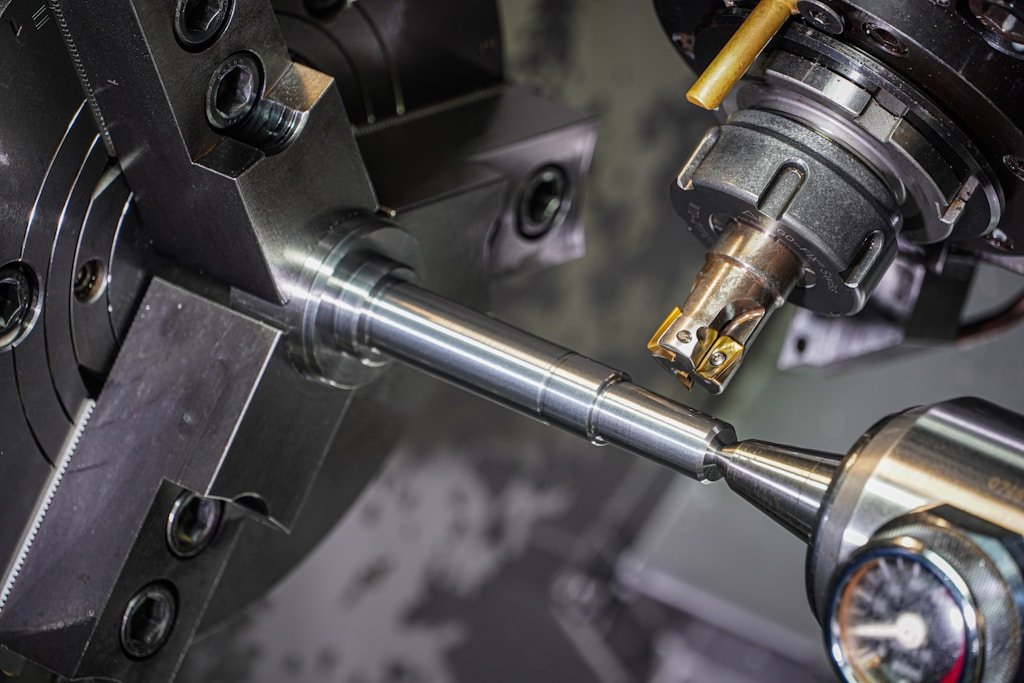
A failure of a lathe, milling machine, grinder, or boring machine can stop much more than a single workstation. In many production plants, one unavailable machine can disrupt an entire manufacturing sequence. That is why the price of a spare part should never be the only purchasing criterion. Compatibility, availability, delivery time, technical support, and the supplier’s knowledge of specific machine tool models are equally important.
If a maintenance manager is considering how to choose machining spare parts supplier, the process should start with a clear understanding of the machinery used in the plant and the components that are most critical to production continuity. A facility operating modern CNC equipment will have different requirements from a company that still relies on older Polish, German, Czech, Romanian, or Bulgarian machine tools.
What experience should a machining spare parts supplier have?
A reliable supplier should offer more than simply selling a component based on a catalogue number. In real maintenance environments, documentation may be incomplete, machine nameplates may be difficult to read, and some required parts may no longer appear in current manufacturers’ catalogues.
This makes practical experience with different generations of machine tools particularly valuable.
MultiMasz supplies spare parts for both older and more modern lathes, milling machines, radial and column drilling machines, presses, shears, boring machines, surface grinders, and cylindrical grinders. Its range includes components for machines manufactured in Poland, Germany, the Czech Republic, Russia, Romania, and Bulgaria, including brands such as FUM Poreba, FAT Wroclaw, AVIA, WMW, Schaudt, TOS, and SKODA.
This type of specialization is especially useful in factories where the machine park has been developed over many years and consists of equipment from several manufacturers.
Why is spare part availability as important as price?
In industrial production, the cost of the component itself can be relatively small compared with the financial impact of machine downtime.
A part that costs slightly more but is available immediately may be a better purchasing decision than a cheaper alternative with a delivery time of several weeks. The longer a critical machine remains unavailable, the greater the potential impact on production schedules, labor utilization, order fulfillment, and customer deadlines.
Before establishing cooperation with a supplier, it is therefore worth checking whether the company keeps its own inventory or mainly orders parts from external manufacturers after receiving a customer request.
Availability becomes even more important with older machine tools. Certain components may no longer be manufactured on a regular basis, which means existing warehouse stock can determine whether a repair takes several days or several weeks.
How can you compare machining spare parts suppliers?
A practical comparison should include both commercial and technical criteria.
| Criterion | Specialized machine tool supplier | General industrial distributor | Why it matters |
|---|---|---|---|
| Knowledge of machine tools | Usually high | Varies considerably | Supports accurate part identification |
| Parts for older machines | Often available | Usually more limited | Important for legacy equipment |
| Technical assistance | Machine-specific | Often catalogue-based | Reduces the risk of ordering the wrong component |
| Warehouse availability | Can be extensive | Depends on manufacturer network | Helps shorten downtime |
| Additional services | May include repairs and modernization | Usually focused on distribution | Useful during larger maintenance projects |
| Machine accessories | Broad, specialized range | More general offer | Simplifies procurement |
The largest supplier is not automatically the best option. What matters most is whether its capabilities match the machines, maintenance processes, and production risks of a particular facility.
How can you verify whether a supplier can identify the correct part?
The initial quotation request is a useful test.
Instead of providing only a brief description such as “gearbox part for a lathe,” maintenance teams should include as much technical information as possible. Relevant details may include:
- machine manufacturer,
- exact model,
- serial number,
- year of manufacture,
- original part number,
- dimensions,
- photographs of the component,
- photographs of the machine nameplate,
- extracts from technical drawings or manuals.
An experienced supplier should be able to indicate what additional information is needed before confirming compatibility.
This is especially important with older machine tools. A particular model may have been manufactured for many years, with design changes introduced during production. Parts that look almost identical can therefore have different dimensions, mounting systems, tolerances, or operating parameters.
Is a catalogue number always enough?
Not necessarily.
Part numbers may change between different versions of technical documentation. Older components may also have been replaced by newer equivalents over time.
For this reason, a catalogue number should be treated as one element of the identification process rather than absolute confirmation. For expensive, rare, or technically critical parts, it is advisable to verify the machine model, dimensions, technical parameters, and intended application as well.
Is it worth choosing a supplier that offers more than spare parts?
Yes, particularly when machines are expected to remain in service for many years.
Maintenance requirements rarely stop at replacing one component. A company may eventually require machine repair, regeneration of assemblies, modernization, replacement accessories, safety equipment, or new tooling.
MultiMasz offers a broader range covering industrial clutches and brakes, oil and coolant pumps, steady rests, lathe chucks, milling heads, tool posts, safety guards, machine lighting, anti-vibration elements, and cable carriers. The company also provides machining, repair, and machine tool modernization services.
For a maintenance department, this can reduce the need to coordinate several unrelated suppliers during a larger repair or refurbishment project.
How important are spare part quality and origin?
Not every machine repair should be approached in exactly the same way.
For components that directly affect machine accuracy, operational safety, spindle performance, feed systems, or other critical assemblies, the origin and technical specification of the spare part should be carefully verified.
An unsuitable substitute may fit physically while still causing problems during operation. Incorrect tolerances, material properties, or mounting dimensions can contribute to premature wear, reduced machining accuracy, vibration, or damage to associated components.
The initial purchase saving can therefore be quickly outweighed by another failure and additional downtime.
Before ordering, it is worth confirming whether a component is:
- an original spare part,
- a newly manufactured replacement,
- a refurbished part,
- an unused component from older warehouse stock.
Transparent information about the origin and condition of the part makes technical risk much easier to evaluate.
What should you check before starting long-term cooperation?
When researching how to choose machining spare parts supplier, it is useful to evaluate the entire purchasing and maintenance process rather than comparing individual quotations only.
Important factors include response time, technical communication, availability of components, supported machine brands, experience with older equipment, and the ability to assist with non-standard failures.
A practical approach is to create a list of critical spare parts for key machines before an emergency occurs. Depending on the equipment, this list might include clutches, pumps, feed system components, electrical parts, bearings, spindle-related components, or braking systems.
The maintenance team can then ask potential suppliers about availability, typical lead times, identification procedures, and alternative solutions.
What should you do before the next spare parts order?
Choosing a machine tool spare parts supplier should be based on the total operational risk associated with a repair, not simply the purchase price of a single component. Strong technical knowledge, broad machine compatibility, access to warehouse stock, experience with legacy equipment, and reliable part identification can all significantly reduce the time required to return a machine to production.
Before the next order, it is worth documenting the most important machines in the facility, identifying critical components, and verifying spare part availability in advance. This gives maintenance teams more control over unexpected failures, reduces the risk of prolonged downtime, and supports purchasing decisions based on technical reliability rather than price alone.
