


Understanding Lisbon’s Hop-On Hop-Off Lines: A Complete Guide to Routes, Stops, and Timings
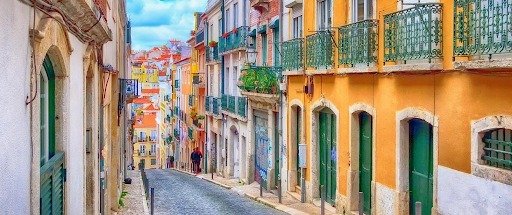
Known for its cobbled streets, wide, glittering Tagus River, panoramic viewpoints, and pastel-colored facades, Lisbon is the colorful capital of Portugal. Here you will find some of the most significant monuments of the country, such as Belém Tower, Jerónimos Monastery and Praça do Comércio. However, Lisbon is also a city that is divided across multiple hills, and hilly roads and the distances between neighborhoods can make sightseeing in this city by foot tiring, particularly in the summer heat.
It is here that the hop-on hop-off bus system is really helpful and not merely a tourist toy, but a much more practical means to get from extremely different parts of the city without getting totally exhausted. This guide explains the operation of Lisbon’s sightseeing bus lines, what they cover, the main stops they make, the length of the bus loops, the frequency of the buses, and which line is best for which sort of traveler. It also includes information on how to sensibly combine routes, as well as some sample one-day and two-day routes.
The first thing to know before booking anything: The Lisbon hop on hop off isn’t a single tour. It’s a system of individual routes that follow various areas of the city. Choosing the right one – or the right combination – can save you a lot of time for sightseeing.
How Lisbon’s Hop-On Hop-Off Bus Network Works
This idea is universal—the concept is to get on at a set point, and ride the loop as long as you want, hopping off when you see an interesting spot. You walk around the place, and then take a bus at a later time to continue walking. In addition, depending on the ticket, you can change routes at certain stops.
A common mistake with many first-time visitors is believing that route colours are uniform between companies – they are not. City Sightseeing Lisbon now has three routes (Red, Blue and Green). The Yellow Bus is a different company, with distinct route names (e.g. Belém Lisbon Bus Tour, Modern Lisbon Bus Tour) and stops (e.g. stops are not necessarily the same as City Sightseeing’s).
This is important for ticket planning. The ticket bought from one operator is normally for use on buses of that operator only, and will not be accepted on a competitor’s bus of a similar colour or in a similar general area. Check the details of your ticket before you plan your day – this is to ensure you have an appropriate ticket from the right company and for the right routes.
Lisbon Hop-On Hop-Off Lines at a Glance
| Route | Main Area | Best For | Approx. Loop |
| Red Route | Central Lisbon & Belém | Historic landmarks | ~1h 45m |
| Blue Route | Oriente & eastern Lisbon | Oceanário & modern Lisbon | ~1h 15m |
| Green Route | Historic hills | Alfama & Castle area | ~1h 15m |
Current City Sightseeing listings give the Red Route a full loop of roughly 1 hour 45 minutes, while the Blue and Green routes each run closer to 1 hour 15 minutes. These figures are a useful baseline for planning, but treat them as approximate — actual loop times shift with traffic, roadworks, and time of year, so it’s worth checking the live timetable on the day you travel.
Red Route – The Best Line for Belém and Lisbon’s Historic Landmarks
The Red Route is the backbone of most first-time visits to Lisbon. It typically starts at Marquês de Pombal, one of the city’s central squares, and heads out toward the western waterfront and the Belém district — home to the highest concentration of must-see landmarks in the city. Published stop information includes areas such as Cais do Sodré, Pilar 7, Museu dos Coches, Jerónimos Monastery, Belém Tower, Padrão dos Descobrimentos, MAAT, and Docas.
Key Red Route Stops
Marquês de Pombal — Good for: Avenida da Liberdade, Eduardo VII Park, central Lisbon orientation.
Cais do Sodré — Good for: the Tagus waterfront, the Time Out Market area, riverfront walks.
Pilar 7 — Good for: views of the 25 de Abril Bridge, the LX Factory creative district, and photography.
Belém — Good for: Belém Tower, Jerónimos Monastery, and the Discoveries Monument — three of Lisbon’s most photographed sites, all within walking distance of each other.
MAAT — Good for: maritime and contemporary art/technology history along the river.
Best Attractions on the Red Route
Belém Tower
Belém Tower is one of Lisbon’s most recognisable landmarks — a fortified 16th-century tower that once guarded the entrance to the harbour. It’s a UNESCO World Heritage Site and remains one of the most photographed buildings in Portugal.
Jerónimos Monastery
Jerónimos Monastery is a masterpiece of Manueline architecture, a distinctly Portuguese style tied closely to the country’s Age of Discoveries. The monastery is also a UNESCO World Heritage Site, and its scale and detail make it worth allotting real time to, rather than a quick photo stop.
Padrão dos Descobrimentos
The Monument to the Discoveries sits directly on the Tagus waterfront and commemorates the Portuguese explorers of the 15th and 16th centuries. An observation deck at the top offers sweeping views back over Belém and the river.
MAAT
The Museum of Art, Architecture and Technology is a striking, modern waterfront building that contrasts sharply with the historic architecture nearby. It’s a good stop for anyone interested in contemporary design alongside Lisbon’s older monuments.
Planning Tip: Belém rewards a longer visit rather than a series of quick hops. Allow several hours here rather than hopping off at every individual stop for just a few minutes each — the district’s main sights are close enough to cover on foot once you’ve committed to getting off the bus.
Blue Route – Discover Modern Lisbon and Parque das Nações
Where the Red Route leans historic, the Blue Route focuses on Lisbon’s eastern side and its more modern face. Current published Blue Route information includes stops around Marquês de Pombal, Avenida Duque de Loulé, Campo Pequeno, Santa Apolónia, Museu do Azulejo, Oceanário de Lisboa, the Vasco da Gama area, Gare do Oriente, Entrecampos, and S. Sebastião.
This route is best for travelers interested in modern architecture, Parque das Nações, the Oceanário, Oriente Station, the Azulejo Museum, and eastern Lisbon in general — an area that looks and feels quite different from the historic center.
Oceanário de Lisboa – The Blue Route’s Main Attraction
The Oceanário is arguably the single biggest reason to choose the Blue Route. It’s one of the largest aquariums in Europe, built for Expo ’98, and houses a large and diverse marine-life collection in a striking waterfront building. It’s a genuinely family-friendly experience, but it also appeals to couples and nature lovers with no children in tow.
Recommended Time: 1.5–2.5 hours
Best For: families, couples, nature lovers, and visitors spending more than a single day in Lisbon.
Parque das Nações and Oriente
Beyond the Oceanário, the Blue Route also passes through Parque das Nações, the former Expo ’98 site. This area includes the Vasco da Gama shopping centre, Gare do Oriente (one of Lisbon’s major transport hubs), striking modern architecture, a long stretch of Tagus waterfront, and a cable car offering views over the river.
This part of the city feels distinctly different from the cobbled streets and historic squares of central Lisbon — it’s wider, newer, and more spread out, which is part of why it’s worth seeing by bus rather than on foot.
Green Route – Walk along Lisbon’s Historic Hills
If you favor the old neighbourhoods, steep and elevated, the Green Route is the one that you need to take into consideration. Published route information lists stops like Marquês de Pombal, Restauradores, Martim Moniz, Castelo de São Jorge, Miradouro da Graça, Panteão Nacional, Feira da Ladra or Praça da Figueira.
It is recommended for visitors who wish to visit Alfama, the castle of São Jorge, Graça, panoramic views of Lisbon and the atmosphere of historic Lisbon.
The Alfama and the São Jorge Castle.
Located on one of Lisbon’s highest points, it provides some of the finest panoramic views in the city, as well as a centuries-long history, which goes back well before the Portuguese kingdom was established, the castle has been fortified. Alfama, below the castle, is Lisbon’s oldest surviving neighbourhood, a labyrinth of narrow streets, traditional tiled buildings, small miradouros (viewpoints) and the home of Fado music. Also on the outskirts of this district is Lisbon Cathedral, one of the oldest churches in the city.
Recommended Time: 1.5–2.5 hours
Tip: Pay attention to the historic hills of Lisbon, which are some of the more difficult neighborhoods to get around for a quick visit. The bus takes much of the work off your shoulders when it comes to getting there, but once you’re off the bus, the walking is still not going to be easy: Alfama’s streets are narrow, steep and often not so easy to walk.
The viewpoint of Miradouro da Graça is one of the best places to view the surrounding landscape.
Miradouro da Graça is one of the city’s most prominent panoramic spots with extensive views of the city, the castle and the Tagus River. It is a popular location for photography and is a good place to see the Graça neighborhood at a slower pace. This is one of the best reasons to cycle the Green Route, especially for those who want to see the famous elevated views of Lisbon.

Here are the timings of the Lisbon Hop-On Hop-Off Bus:
Operating hours are not the only key to understanding frequency — a route with 25 minutes between services offers much more flexibility than a route with 90 minutes between services. The approximate following is listed on the current City Sightseeing:
Red Route — First departure: around 9:30 AM. Last departure: around 6:00 PM. Frequency: approximately every 30 minutes. Loop: approximately 1 hour 45 minutes.
Blue Route — First departure: around 9:30 AM. Last departure: around 5:00 PM. Frequency: approximately every 90 minutes. Loop: approximately 1 hour 15 minutes.
Green Route — First departure: around 10:00 AM. Last departure: around 6:00 PM. Frequency: approximately every 25 minutes. Loop: approximately 1 hour 15 minutes.
These figures are operator-specific and can change with the season or operating conditions. Always check the current timetable directly with the operator before finalizing your plans.
How Often Do Lisbon Hop-On Hop-Off Buses Run?
Frequency matters more than it might seem at first glance. If you miss a Green Route bus, running roughly every 25 minutes, the wait is usually short and easy to absorb into your day. If you miss a Blue Route departure, which can run as infrequently as every 90 minutes, your entire itinerary can lose a significant chunk of time.
Planning rule: before hopping off at any stop, check that day’s frequency for the specific route you’re on — particularly on the less frequent Blue Route, where a missed bus has real consequences for your schedule.
Which Lisbon Hop-On Hop-Off Line Is Best for First-Time Visitors?
Choose Red if: it’s your first visit, you want to see Belém, you’re prioritising major historic landmarks, or you only have one day in Lisbon.
Choose Blue if: you want to visit the Oceanário, you’re drawn to modern architecture, or you’re interested in Parque das Nações.
Choose Green if: you want to see Alfama, you want to visit São Jorge Castle, you’re chasing panoramic viewpoints, or you want a feel for traditional, older Lisbon.
Overall, the Red Route is the strongest starting point for most first-time visitors, with the Green and Blue routes becoming valuable additions depending on your specific interests.
Which Lisbon Hop-On Hop-Off Stops Should You Not Miss?
If your time is limited, prioritise this list:
- Belém Tower
- Jerónimos Monastery
- Padrão dos Descobrimentos
- Cais do Sodré
- Pilar 7
- Oceanário
- Gare do Oriente
- São Jorge Castle
- Miradouro da Graça
- Panteão Nacional
Can You Ride All Three Lines in One Day?
Yes, technically, but it’s not likely that one would be able to run 3 full courses in one day while enjoying any of the attractions. Hopping off of just a single loop takes hours, the waiting time between connecting buses takes hours too and Lisbon’s traffic can add some unpredictable time on top of this.
Instead, it’s best to select one main route and a backup route for your day. For instance, the Red Route in the morning, with a stop in Belém, and the Green Route in the afternoon for Alfama. This will allow you to get a bit more real sightseeing time than if you tried to hit all three routes in a single day.
A One-Day Lisbon Hop-On Hop-Off Bus Itinerary
9:00 AM – Start in Central Lisbon, around Marquês de Pombal or another convenient boarding stop.
9:30 AM – Take the Red Route toward Belém.
10:15 AM – Belém Tower. Explore the waterfront area.
11:00 AM – Jerónimos Monastery. Allow enough time to properly see the monastery and its surroundings.
12:30 PM – Padrão dos Descobrimentos. Take photos and explore the waterfront.
1:15 PM – Lunch in Belém. Try a local café or restaurant — this area has plenty of options.
2:15 PM – Return toward Central Lisbon on the Red Route.
3:00 PM – Switch to the Green Route and head toward the historic hills.
3:30 PM – São Jorge Castle. Explore the castle grounds and surrounding streets.
5:00 PM – Miradouro da Graça. Take in the panoramic views.
5:45 PM – Return toward Central Lisbon, finishing around Rossio or Marquês de Pombal.
6:30 PM – Evening in Baixa. Explore Praça do Comércio, Rua Augusta, and Chiado on foot.
Treat this as a sample itinerary rather than a guaranteed schedule — actual departure times and traffic conditions will vary.
A Two-Day Lisbon Hop-On Hop-Off Itinerary
Day 1 – Historic Lisbon & Belém: Red Route, covering Belém Tower, Jerónimos Monastery, Padrão dos Descobrimentos, MAAT, and Cais do Sodré.
Day 2 – Modern Lisbon + Alfama: Morning on the Blue Route (Oceanário, Parque das Nações, Oriente), afternoon on the Green Route (São Jorge Castle, Alfama, Graça, Panteão Nacional).
Spreading your sightseeing over two days is considerably more relaxed, since you’re not trying to squeeze three distinct areas of the city into a single day.
Lisbon Hop-On Hop-Off Bus vs Public Transport
| Feature | Hop-On Hop-Off | Metro/Tram |
| Sightseeing commentary | Yes | No |
| Attractions | Excellent | Good |
| Local transport | Moderate | Excellent |
| Views | Excellent | Limited |
| Tourist orientation | Excellent | Moderate |
| Flexibility | High | Very high |
| Historic hills | Good | Good |
| Belém | Excellent | Good |
Verdict: use the Hop-On Hop-Off bus for sightseeing and orientation, and switch to Lisbon’s metro or tram network when you need a faster, more direct local journey.
Tips for Using Lisbon’s Hop-On Hop-Off Lines
- Check which operator your ticket belongs to before you travel.
- Don’t assume route colours are identical between operators.
- Download or save the route map in advance.
- Start early to make the most of the day.
- Prioritise Belém if this is your first visit.
- Check bus frequency before hopping off, especially on the Blue Route.
- Allow extra time for traffic delays.
- Wear comfortable shoes — you’ll still be walking once you’re off the bus.
- Bring sun protection in summer; the upper deck offers little shade.
- Carry water, particularly in warmer months.
- Check attraction opening hours before you plan your stops.
- Keep track of the last bus departure time for your route.
- Don’t try to visit every single stop — prioritise instead.
- Use walking for Alfama and Baixa, where the streets are narrow and the bus can’t always get close.
- Check whether your ticket includes any boat or tram add-ons.
Best Time to Ride Lisbon’s Sightseeing Buses
Morning is best for Belém, photography, and avoiding the biggest crowds.
Afternoon works well for museums, Alfama, and shopping in central Lisbon.
Late afternoon is ideal for river views, photography, and a more relaxed pace of sightseeing.
Summer tip: the upper deck of the bus can become very hot and sunny with little shade, so carry water, sunglasses, and sunscreen if you’re travelling between June and September.
Common Mistakes to Avoid
Mistake 1: Assuming all Lisbon buses use the same routes. They don’t — different operators run entirely separate networks.
Mistake 2: Trying to visit every stop. Prioritise the attractions that matter most to you rather than hopping off everywhere.
Mistake 3: Ignoring frequency. A missed bus on a low-frequency route can derail the rest of your day.
Mistake 4: Spending the whole day onboard. The bus is a tool for getting around — the real value comes from hopping off and exploring.
Mistake 5: Forgetting Lisbon’s hills. The bus reduces walking, but it doesn’t eliminate it, particularly in Alfama and around the castle.
Mistake 6: Not checking current timetables. Operating schedules shift with the seasons, so always verify before you travel.
Frequently Asked Questions
How many Hop-On Hop-Off lines are there in Lisbon?
City Sightseeing Lisbon currently operates three lines — Red, Blue, and Green — though other operators such as Yellow Bus run separate routes under different names.
Which Lisbon bus route goes to Belém?
The Red Route covers Belém, including Belém Tower, Jerónimos Monastery, and the Discoveries Monument.
Which route goes to the Oceanário?
The Blue Route serves the Oceanário and the wider Parque das Nações area.
Which Lisbon sightseeing route goes to São Jorge Castle?
The Green Route covers São Jorge Castle and the surrounding Alfama district.
How long does the Lisbon Hop-On Hop-Off bus take?
Loop times vary by route: roughly 1 hour 45 minutes for the Red Route, and around 1 hour 15 minutes for both the Blue and Green routes, though traffic can affect these figures.
How frequently do Lisbon sightseeing buses run?
Frequency varies significantly by route — the Green Route can run as often as every 25 minutes, while the Blue Route may run only every 90 minutes.
Can I use one ticket on all Lisbon Hop-On Hop-Off routes?
Generally, a ticket is valid across all routes operated by the company you purchased it from, but it won’t work on a different operator’s buses.
Which Lisbon Hop-On Hop-Off route is best for first-time visitors?
The Red Route is usually the strongest starting point, since it covers Belém and most of the city’s headline historic landmarks.
Can I see Lisbon in one day by Hop-On Hop-Off Bus?
Yes, though realistically you should focus on one or two routes rather than attempting all three in full.
Is the Lisbon sightseeing bus worth it?
For visitors short on time or unfamiliar with the city, it’s a practical way to cover Lisbon’s spread-out attractions and steep terrain without excessive walking.
Lisbon Hop-On Hop-Off Lines – Quick Reference
| Route | Main Highlights | Best For |
| Red | Belém Tower, Jerónimos, MAAT, Cais do Sodré | First-time visitors |
| Blue | Oceanário, Oriente, Azulejo Museum | Families & modern Lisbon |
| Green | São Jorge Castle, Alfama, Graça | History & viewpoints |
Current City Sightseeing route information supports these broad route themes, but exact stops and operating details should be checked against the current operator map before you travel.
Conclusion
Lisbon’s sightseeing bus service isn’t just one single, continuous route; it is organized around the various sections of a city with steep hills, a historic centre and a modern waterfront district. The knowledge of that difference is the key between an efficient day of sightseeing and a ton of wasted time waiting for the wrong bus.
The recommendations: take the Red Route to see the main monuments of Belém and Lisbon, the Blue Route to explore Parque das Nações and the Oceanário, and the Green Route to discover the most iconic viewpoints of Alfama, São Jorge Castle and Lisbon. On a first visit to the museum, follow the Red Route and then visit the Green or Blue Route as your interests dictate.
The most crucial thing in this entire guide is the following: Before travelling, check the operator, the route, the frequency and the current timetable! Lisbon has a variety of sightseeing bus companies that operate several lines and timetables, and if you can plan, you will save much more time than any single decision to take.