
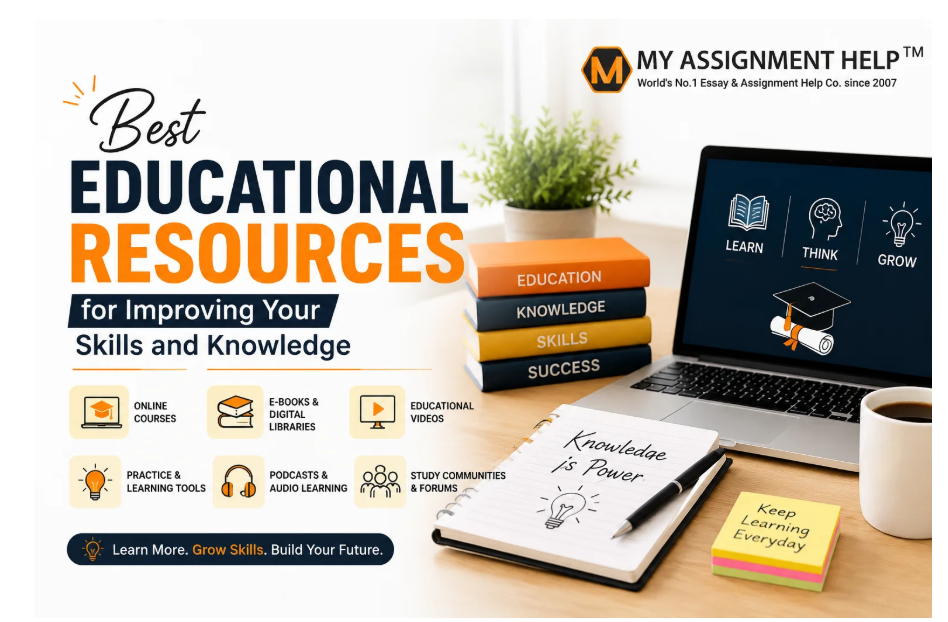
In a world where knowledge changes quickly, learning is no longer limited to classrooms, textbooks, or traditional lectures. Students, working professionals, and lifelong learners now have access to thousands of educational resources that can help them develop valuable skills and deepen their understanding of different subjects. From online courses and digital libraries to educational videos, academic communities, and interactive learning platforms, the right resources can make learning more flexible, practical, and engaging.
Choosing the right learning resources, however, can sometimes feel overwhelming. There are countless websites, applications, courses, podcasts, books, and study platforms available online. The challenge is not simply finding information but identifying resources that are reliable, relevant, and suitable for your individual learning goals. A thoughtful approach can help learners avoid information overload and build a useful collection of resources that supports both academic and professional development.
For students managing multiple subjects and demanding deadlines, assignment help online can also be considered a supplementary academic resource. When used responsibly, academic assistance can help students understand difficult concepts, organize their research, review their work, and identify areas that need improvement. The most effective learning approach combines external resources with independent study so that students gradually become more confident and capable learners.
Why Educational Resources Matter for Skill Development
Educational resources provide learners with opportunities to explore subjects beyond the limitations of a standard curriculum. A textbook may introduce a concept, while an online lecture can demonstrate how that concept works in practice. Similarly, an interactive exercise can allow learners to apply what they have studied.
Good educational resources can help learners:
- Develop subject-specific knowledge
- Improve research and analytical skills
- Strengthen communication abilities
- Learn practical and technical skills
- Prepare for examinations and assessments
- Explore new career opportunities
- Develop independent learning habits
- Keep up with changes in their chosen field
The most important benefit is flexibility. Learners can often choose what they want to study, when they want to study, and how deeply they want to explore a particular topic.
Online Courses for Structured Learning
Learn at Your Own Pace
Online courses have become one of the most popular educational resources because they provide structured learning without requiring students to attend a physical classroom. Many courses are divided into modules that cover a subject progressively, making it easier to understand complex material.
Learners can select courses based on their current knowledge level. Beginners can start with introductory lessons, while experienced learners can choose advanced courses that focus on specialized areas.
Develop Career-Oriented Skills
Online learning can also support career development. Courses in programming, digital marketing, business analytics, project management, graphic design, communication, and other fields can help learners acquire skills that are useful in professional environments.
Before enrolling in a course, learners should consider the syllabus, course duration, instructor qualifications, practical assignments, learner reviews, and opportunities for assessment. A course should offer meaningful learning rather than simply providing a certificate.
Digital Libraries and Online Research Resources
Digital libraries are another valuable resource for students and researchers. They provide access to books, journals, research papers, reports, and other academic materials without requiring learners to visit a physical library.
Improve Research Skills
Using academic databases teaches students how to locate relevant information efficiently. Learners can practice using keywords, filters, subject categories, and citation information to identify useful sources.
Research skills are especially important for university students because academic assignments often require evidence from credible sources. Learning how to distinguish scholarly information from unreliable online content can significantly improve the quality of academic work.
Explore Multiple Perspectives
A strong research process does not depend on a single source. Reading different authors and comparing their arguments allows learners to understand a topic from multiple perspectives. This approach can encourage critical thinking and help students form well-supported conclusions.
Educational Videos and Podcasts
Not every learner absorbs information effectively through written material. Educational videos and podcasts provide alternative ways to understand concepts.
Visual Learning
Videos can be particularly useful for subjects involving demonstrations, diagrams, experiments, or practical procedures. A visual explanation may make a complicated concept easier to understand than a lengthy written description.
Learners can pause, replay, and revisit difficult sections whenever necessary. This flexibility makes video-based learning useful for both beginners and advanced students.
Audio-Based Learning
Educational podcasts are convenient for learners who want to use their commuting, walking, or leisure time productively. Podcasts can cover topics ranging from science and technology to business, history, communication, and personal development.
However, learners should still verify important information against reliable sources, especially when podcasts involve opinions rather than academically reviewed material.
Interactive Learning Platforms
Practice Makes Learning Stronger
Interactive resources allow learners to apply knowledge instead of simply reading about it. Quizzes, simulations, coding exercises, virtual laboratories, flashcards, and educational games can make learning more active.
For example, a programming student may understand a programming concept theoretically but develop stronger skills by writing and testing actual code. Similarly, a language learner can improve vocabulary through repeated exercises and interactive conversations.
Track Your Progress
Many digital learning platforms provide progress tracking. These features can help learners identify strengths and weaknesses and determine which topics require additional practice.
Tracking progress also creates a sense of achievement. Completing modules or improving quiz scores can motivate learners to continue studying consistently.
Academic Writing and Research Support
Academic writing is an essential skill for students across disciplines. Essays, reports, case studies, research papers, dissertations, and presentations require learners to communicate ideas clearly and logically.
Students can use writing guides, university resources, academic style manuals, and credible reference materials to improve their writing.
Learn How to Structure Academic Work
A well-organized academic paper generally has a clear purpose, logical sections, supporting evidence, and an appropriate conclusion. Students should learn how introductions, body sections, arguments, evidence, analysis, and conclusions work together.
Understanding structure is more valuable than simply trying to increase word count. Every section should contribute meaningfully to the overall argument.
Improve Referencing and Citation Skills
Proper referencing is another important part of academic writing. Different institutions and disciplines may use styles such as APA, MLA, Chicago, or Harvard.
Students should consult official institutional guidelines whenever possible. Correct citation practices help acknowledge sources and make research more transparent.
Professional Writing Support and Skill Improvement
At certain stages of academic or professional development, learners may also seek guidance from experienced writers. Professional report writers can provide useful insights into organization, presentation, clarity, and professional communication when their work is used as guidance rather than as a substitute for learning.
Understanding how professional reports are structured can help students improve their own writing. A strong report typically presents information in a logical sequence, uses appropriate headings, supports claims with evidence, and maintains a clear and professional tone.
The goal should always be skill development. Students can study examples, identify effective techniques, and then apply those techniques to their own work.
Educational Blogs and Knowledge Platforms
Blogs can be valuable learning resources when they are written by knowledgeable authors and supported by credible information. Educational blogs often explain complicated subjects in accessible language and provide practical examples.
Use Blogs for Additional Perspectives
A textbook may provide formal academic explanations, while an educational blog may explain the same concept using everyday examples. Reading both can help learners develop a broader understanding.
However, not every blog is equally reliable. Learners should check the author’s expertise, publication date, references, and claims before relying on information for academic work.
Free Educational Resources
Open Educational Materials
Many organizations and educational institutions provide free learning materials. These may include lecture notes, open textbooks, tutorials, practice questions, webinars, and recorded classes.
Free resources can be particularly useful for learners who cannot afford expensive courses or textbooks. They also allow students to explore a topic before deciding whether they want to pursue a paid program.
Public Educational Content
Libraries, universities, museums, professional organizations, and educational institutions often publish valuable materials for the public. Exploring these resources can expose learners to subjects they may not encounter in their regular curriculum.
The key is to focus on quality rather than quantity. Collecting hundreds of resources is less useful than consistently studying a small number of trustworthy ones.
How to Choose the Right Educational Resources
With so many options available, learners need a simple method for evaluating educational resources.
Define Your Learning Objective
Start by asking what you want to achieve. Are you preparing for an examination? Learning a professional skill? Improving academic writing? Preparing for a career change?
A clear objective makes it easier to identify suitable resources.
Check Reliability
Look for resources created or reviewed by qualified educators, researchers, universities, professional organizations, or recognized experts. Check whether claims are supported by evidence.
Consider Your Learning Style
Some learners prefer reading, while others learn better through videos, discussions, practice exercises, or demonstrations. Choose resources that match the way you learn most effectively.
Evaluate Practical Value
A resource should encourage application. Whenever possible, choose materials that include examples, exercises, projects, case studies, or assessments.
Building a Personal Learning Routine
Having access to good resources is only one part of successful learning. Consistency is equally important.
Set Realistic Study Goals
Instead of attempting to study for several hours without a clear plan, establish manageable goals. For example, you could dedicate a specific amount of time each day to reading, practicing, or reviewing a particular topic.
Small, consistent efforts can produce better long-term results than occasional periods of intense study.
Review and Practice Regularly
Reviewing previously learned information helps strengthen understanding. Learners can use summaries, flashcards, practice questions, discussions, or self-testing to reinforce important concepts.
Practice should also include applying knowledge to unfamiliar situations. This helps determine whether you genuinely understand a topic rather than simply remembering information.
The Role of Technology in Modern Education
Technology has made learning more accessible than ever. Artificial intelligence tools, digital classrooms, mobile applications, virtual simulations, collaborative platforms, and online communities are changing how people acquire knowledge.
However, technology should support learning rather than replace critical thinking. Learners still need to evaluate information, question assumptions, conduct independent research, and develop their own ideas.
Digital tools are most effective when they are combined with curiosity, discipline, and active participation.
Conclusion
Educational resources can play a major role in improving skills and expanding knowledge. Online courses, digital libraries, educational videos, podcasts, interactive platforms, academic writing resources, professional guidance, and open educational materials give learners many ways to study beyond traditional classrooms.
The most effective strategy is not to use every available resource but to choose resources that match specific learning objectives. Students should prioritize credible information, practice what they learn, review their progress, and develop consistent study habits.
Education is an ongoing process. Whether someone is preparing for university assessments, developing professional skills, learning a new subject, or exploring a future career, the right educational resources can make the journey more productive and rewarding. With thoughtful selection and regular practice, learners can turn online and offline resources into practical knowledge that continues to benefit them long after a course or assignment has been completed.
Frequently Asked Questions
1. What are the best educational resources for improving skills?
The best resources include online courses, digital libraries, educational videos, podcasts, e-books, practice platforms, webinars, and academic communities. The right choice depends on your learning goals, subject, preferred learning style, and current skill level.
2. How can online courses help improve my knowledge?
Online courses provide structured lessons that allow you to learn at your own pace. They can help you understand new concepts, develop practical skills, complete exercises, and explore career-focused subjects from anywhere with an internet connection.
3. Are free educational resources useful for students?
Yes. Free educational resources can provide access to valuable books, tutorials, lectures, research materials, practice exercises, and educational videos. Students should prioritize resources from reliable universities, educational organizations, libraries, and qualified professionals.
4. How can students choose reliable educational resources?
Students should check the author’s qualifications, source credibility, publication date, references, course syllabus, and user feedback. It is also useful to compare information across multiple trustworthy sources before using it for academic research or assignments.
5. Can educational resources help with academic and professional development?
Absolutely. Educational resources can strengthen research, writing, communication, technical, analytical, and problem-solving skills. Consistent learning and practical application can help students perform better academically while also preparing them for future professional opportunities.