

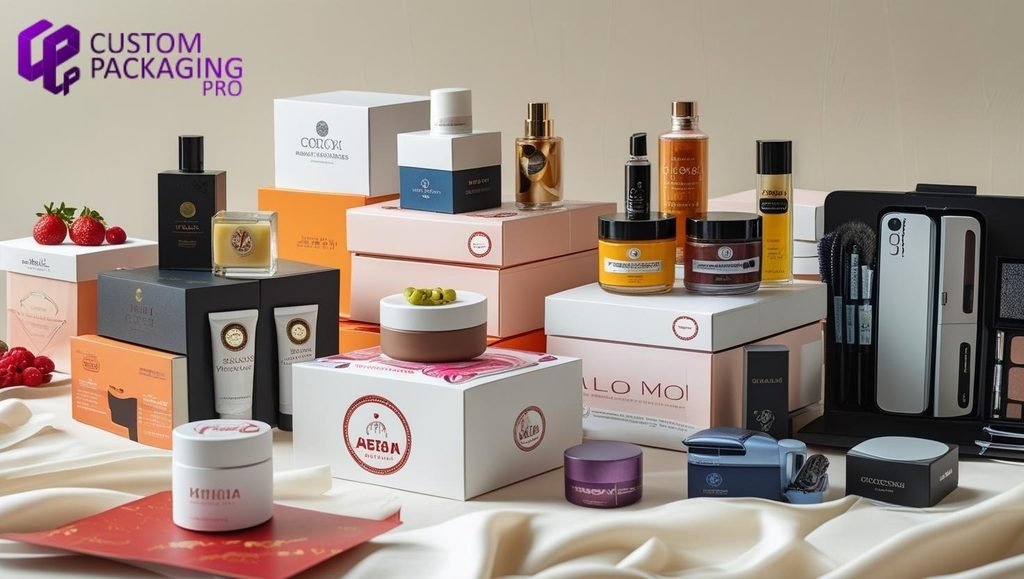
That creates a unique challenge for Retail Packaging. Customers may see the package before they know anything about the company behind it. If the design is difficult to understand, the box feels oversized, or important product information disappears into the artwork, even a strong product can struggle to communicate its value.
Effective Custom Retail Packaging therefore starts with shopper behavior rather than decoration. The question is not simply, “What should this box look like?” It is, “What does a customer need to understand when they see this product for the first time?”
The First Few Seconds Matter More Than Most Packaging Details
Retail shoppers rarely study every package carefully.
In many product categories, they first notice color, shape, product type, brand name, and one or two distinguishing details. Only after the package earns their attention do they begin reading smaller information.
This makes information hierarchy essential in Retail Packaging Boxes.
Imagine a skincare product where the largest text is a decorative slogan while the actual product name is small and difficult to locate. The packaging may look sophisticated, but a shopper should not have to search for basic information.
A stronger hierarchy usually makes several things clear quickly:
Brand → Product → Variant → Main distinguishing information → Supporting details
This does not mean every box should use the same layout. It means the design should reflect the order in which information matters.
For Custom Retail Boxes, the front panel has limited space. Every element competing for attention reduces the impact of the others.
Shelf Position Changes How Packaging Should Be Designed
Packaging is not viewed in a design file. It is viewed in a physical environment.
Products can appear above eye level, below eye level, closely packed together, displayed on hooks, stacked horizontally, or placed inside larger retail displays. This changes which parts of the box customers actually see.
A tall product may show mostly its narrow front panel. A small accessory box may only expose its upper section when several units are placed behind one another. Products placed on lower shelves may be viewed from above.
This is why custom retail packaging should be considered in three dimensions.
Brands should think about:
- Which panel faces the customer
- Whether the product will be stacked
- How closely competing products will sit beside it
- Whether the top panel will be visible
- Whether packaging needs to hang
- Whether retail staff will repeatedly handle the box
A beautiful side panel does little for visibility if customers almost never see it.
Packaging Shape Can Help Customers Understand the Product
The physical form of packaging sends information before the customer reads anything.
A compact folding carton can communicate efficiency and simplicity. A structured two-piece box may suggest a more gift-oriented product. A window can allow the item itself to become part of the visual presentation.
For some categories, product boxes need to explain size accurately. If a very small item is placed inside oversized packaging, customers may expect more product than they actually receive.
This creates both practical and perception problems.
A better approach is to develop the package around the product’s genuine dimensions while leaving enough room for protection, inserts, instructions, or accessories where required.
Good packaging should support the product rather than exaggerate it.
When Should Retail Packaging Show the Actual Product?
One important design decision is whether the product should remain hidden or visible.
Some items benefit from full printed packaging because the box gives brands complete control over presentation. Others benefit from windows because shoppers want to inspect color, texture, size, or finish before purchasing.
For example, a customer buying:
- a decorative candle may want to see the vessel,
- a food product may respond to attractive product imagery,
- a textile accessory may benefit from material visibility,
- a gift item may benefit from a more concealed reveal.
Windows are therefore not automatically better.
They affect printing space, structural strength, material combinations, and potentially recyclability. A window should answer a real customer need rather than simply being added because it looks interesting.
The same applies to cut-outs, sleeves, openings, handles, and other structural features used in custom packaging boxes.
Retail Boxes Should Be Designed as Part of a Product Family
One retail box can look excellent on its own and still fail as part of a larger product range.
This happens when brands create each new package independently.
One product uses a centered logo. Another moves it to the corner. One variant uses photography. Another uses illustration. Font sizes change. Colors drift. Information appears in different places.
Eventually the shelf presence becomes inconsistent.
A stronger custom retail system establishes visual rules.
The company may define a consistent logo area, product naming system, typography, information hierarchy, background structure, and placement for important details. Each product can then introduce its own color, imagery, or variation within that framework.
This helps multiple custom product boxes look related without making every package identical.
For brands planning to expand into a wide range of products, this system becomes increasingly valuable.
Small Businesses Should Avoid Overdesigning Early Packaging
A small business often wants its first professional package to include every possible premium feature.
Foil, embossing, windows, sleeves, inserts, specialty coatings, custom shapes, interior printing, and decorative extras can all look appealing individually. Together, they can make production complicated and expensive.
A better strategy is to decide what the packaging genuinely needs to accomplish.
If strong printed graphics and accurate sizing already communicate the brand effectively, additional components may not provide enough value to justify them.
Early packaging should also leave room for growth.
A company launching three products may soon expand to ten. Developing a visual and structural system that can adapt to new SKUs is often more useful than creating one highly complex package that becomes difficult to reproduce across the product range.
Printed Retail Packaging Needs to Survive Real Handling
Retail packaging does not remain untouched after production.
Boxes are packed into master cartons, transported, unpacked, stocked, moved by employees, examined by customers, returned to shelves, and sometimes carried through multiple distribution stages.
This means printed retail packaging should be evaluated for more than artwork quality.
Dark solid colors may show scuffing more visibly than lighter designs. Fine details can become difficult to reproduce depending on printing methods and materials. Artwork close to folds can distort. Important content positioned near cut lines can become difficult to read.
Before approving custom printed retail packaging, businesses should review actual dielines carefully.
Bleed areas, folds, glue sections, closure tabs, windows, barcodes, legal information, and product identifiers all need enough space.
A design that looks excellent as a flat rectangle may change considerably after the box is folded into its final shape.
Retail Packaging and Ecommerce Packaging Are Moving Closer Together
Many brands no longer sell through only one channel.
The same product may appear on a retail shelf, an ecommerce website, a marketplace, and a social commerce platform. This creates a packaging question: should the retail box also survive shipping?
Sometimes it can.
A strong mailer box may serve as both the presentation and delivery package, particularly for direct-to-consumer products. In other situations, the branded retail carton needs a separate protective postal box around it.
The decision should be based on actual shipping risk.
A lightweight non-fragile product may need relatively little secondary protection. A delicate product could require additional cushioning or corrugated protection.
The important point is to design retail and ecommerce packaging together where possible.
Otherwise, businesses can end up with attractive product packaging that requires excessive outer material simply because shipping was never considered during development.
Packaging Should Help Retail Staff Too
One part of packaging design is rarely visible to customers: operational efficiency.
Retail staff and fulfillment teams repeatedly open cartons, assemble boxes, identify product variants, scan barcodes, and restock inventory.
Small packaging decisions can affect all of these tasks.
Barcodes should be easy to locate and scan. Similar SKUs should have clear visual differences. Boxes should stack reliably. Flat-packed packaging should assemble without unnecessary steps.
If employees frequently confuse two product variants because the side panels look almost identical, that is a packaging problem.
If a complicated box takes too long to assemble during order fulfillment, that is also a packaging problem.
A good packaging solution improves the product’s journey before, during, and after it reaches the customer.
Eco-Friendly Decisions Start With Packaging Efficiency
The term eco friendly appears frequently in retail packaging, but responsible packaging development should begin with measurable design decisions.
An oversized carton uses more material and may require additional inserts or filler. Multiple decorative layers can make packages harder to separate. Plastic components can complicate recycling depending on local systems.
Sometimes the most meaningful improvement is simply making the box smaller and simpler.
Paper-based structures can be suitable for many retail applications, but environmental performance depends on actual material composition, coatings, adhesives, inks, production, transportation, and end-of-life systems.
Brands looking for better packaging solutions should therefore evaluate the complete package rather than relying on appearance alone.
A brown box is not automatically sustainable, and an attractive environmental claim should never replace material verification.
Gift Boxes and Everyday Retail Boxes Serve Different Expectations
Not every product should create the same opening experience.
Everyday products usually benefit from fast access, clear information, and simple disposal. Premium products and gift boxes may justify slower opening, layered presentation, or more substantial construction.
This distinction matters because unnecessary luxury can make ordinary products inconvenient.
A customer buying a frequently used household item may not want several packaging layers. A customer buying a premium gift, by contrast, may consider the package part of the product experience.
Unique designs work best when they match the purchase occasion.
The goal should be to make products stand out for the right reasons, not simply to make the packaging more complicated than competing boxes.
A Practical Retail Packaging Review Before Production
Before placing a larger order, businesses should evaluate the package in the context where customers and staff will actually use it.
Place the prototype beside competing products. View it from several feet away. Put it on a shelf. Stack several units. Turn it sideways. Check whether the brand remains recognizable.
Then review the practical side.
Does the product move? Is it easy to pack? Can the barcode be scanned? Are instructions readable? Does the closure work repeatedly? Does the printed surface show damage too easily?
Finally, give the box to someone unfamiliar with the product.
If they cannot quickly explain what it contains and what differentiates it, the packaging may need further refinement.
This kind of testing often reveals more than evaluating artwork on a monitor.
Building Custom Retail Packaging With Custom Packaging Pro
Custom Packaging Pro helps brands develop Custom Retail Boxes around the way products are displayed, handled, purchased, and delivered. Instead of treating packaging as artwork applied to a generic carton, businesses can coordinate box dimensions, structural style, printed graphics, inserts, materials, and shelf presentation around the actual product.
Companies can develop custom boxes with logo for stronger retail recognition, scalable custom retail packaging boxes for growing product ranges, and custom wholesale packaging for larger production requirements. The aim is to create retail packaging that looks considered on the shelf while remaining practical throughout packing, distribution, merchandising, and customer use.
FAQs
- What should be considered when designing custom retail packaging?
Start with product dimensions, weight, fragility, shelf position, customer information requirements, distribution method, printing needs, and how the package will be handled before and after purchase. - How can retail packaging help a product stand out?
Clear information hierarchy, consistent branding, appropriate structure, readable typography, useful product visibility, and distinctive but relevant design can make a product easier to recognize without overcrowding the package.
- Should every product use unique retail packaging?
Not necessarily. Related products often benefit from a consistent packaging system with controlled differences between individual SKUs. This creates stronger brand recognition while helping customers distinguish products.
- Can retail packaging also be used for online orders?
Yes, depending on its structure and the product’s shipping requirements. Some retail boxes can function inside protective postal packaging, while stronger mailer-style structures may serve both presentation and shipping purposes.
- Is custom retail packaging useful for small businesses?
Yes. Small businesses can use custom retail packaging to establish consistent branding and professional presentation. The most practical approach is usually to prioritize good sizing, clear printing, and scalable design before adding complex decorative features.