

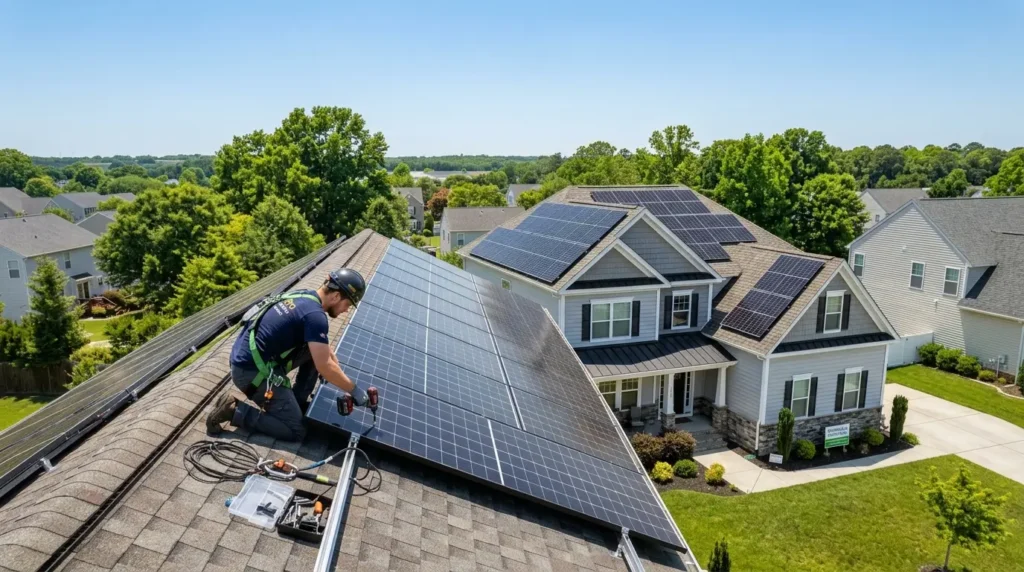
Every owner of a house and enterprise proprietor ultimately asks the same question: why does the energy bill keep climbing no matter how careful we are with usage? It’s a honest frustration, and it normally factors to at least one root reason: an old reliance on a grid that keeps getting more costly to keep. The encouraging component is that rooftop strength structures have come an extended manner, and a well-designed setup can begin paying for itself faster than maximum human beings count on. This article breaks down how a well-planned rooftop system lowers costs, what to search for in a provider, and how to avoid mistakes that quietly drain savings.
Why Rooftop Systems Are Becoming the Smarter Long-Term Choice
Traditional grid strength comes with a built-in trouble: you have nearly no control over pricing. Rates rise with gas prices, infrastructure maintenance, and seasonal demand spikes, none of which a homeowner can negotiate. A rooftop system flips that dynamic, supplying you with a fixed, predictable supply of power right above your head. Reputable Solar Installation Services in Chesapeake providers have seen this shift firsthand, with more property owners inquiring about prices to get away from unpredictable month-to-month payments.
- Grid energy prices are tied to elements you can’t manipulate or predict
- A rooftop system locks in most of your electricity expenses for many years
- Property values regularly rise once a first-class system is established
That predictability is why rooftop energy has moved from a spot upgrade to a mainstream financial selection. It’s no longer just early adopters making the transfer; it is realistic homeowners going for walks the numbers and figuring out the maths works in their favour
How a Well-Designed System Actually Cuts Your Bills
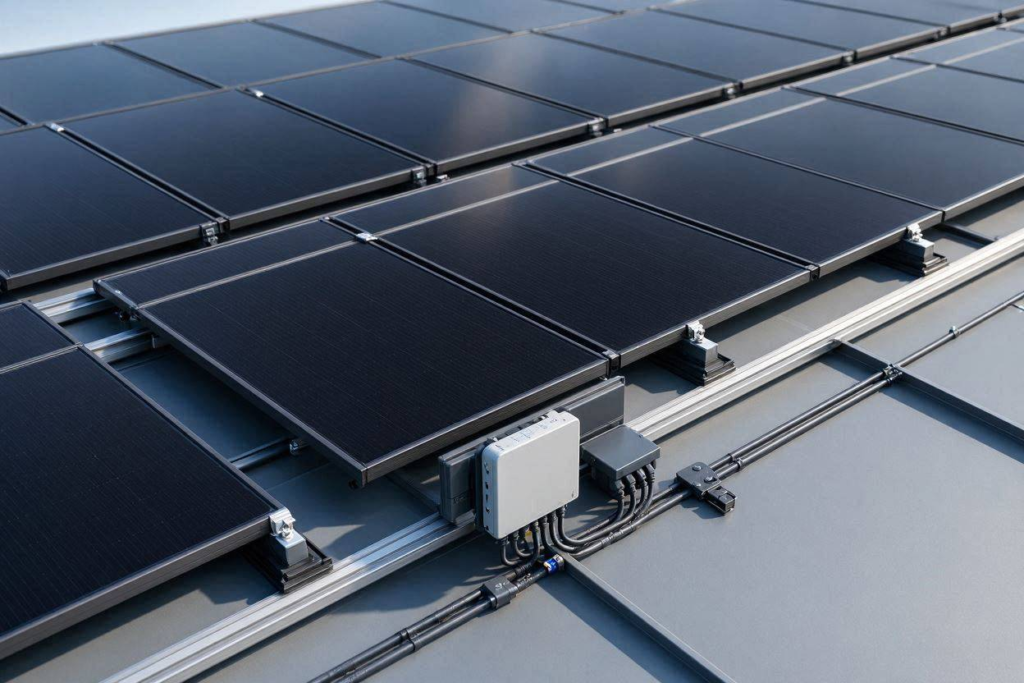
The savings are not theoretical; they come from a simple mechanism. Panels convert daylight into usable power during the day, offsetting what you’d otherwise pull from the grid. On sunny days, an efficiently sized machine can cover maximum, if not all, of a property’s daytime energy needs.
- Daytime generation reduces or gets rid of top-hour grid reliance
- Excess energy can often be credited back via net metering
- Battery add-ons enlarge those savings into the evening hours
Getting this right depends heavily on sizing; that is where a specialised Rooftop Solar Panel Services group will become valuable, because an undersized or oversized system both leaves financial savings at the table or wastes money on unused capability.
Comparing Your Financing and Ownership Choices
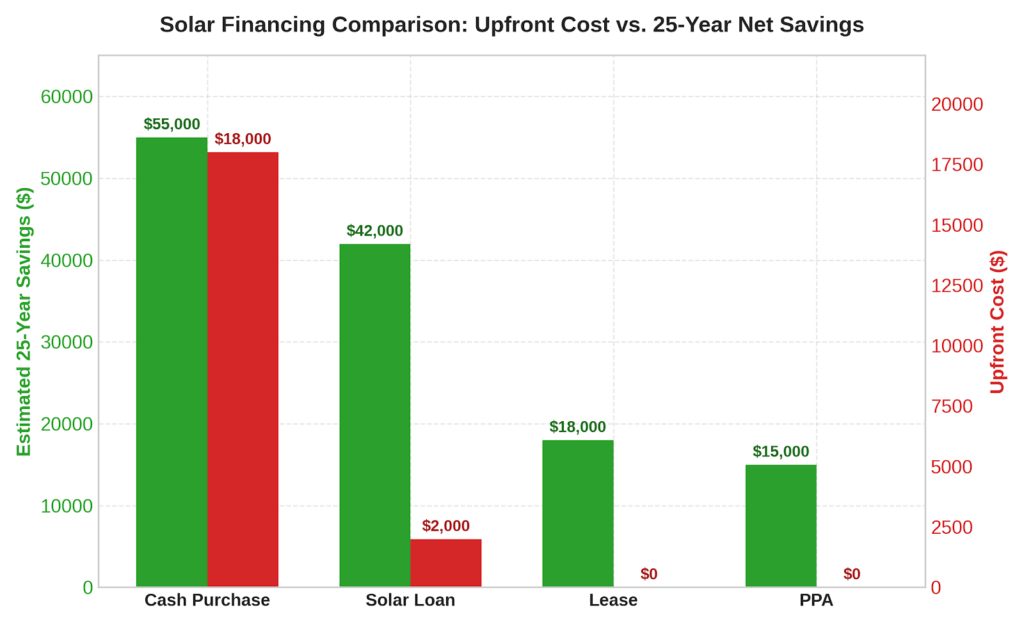
Not everyone desires to pay for a system outright. There are numerous paths to ownership, each balancing upfront fee against long-term financial savings.
- Cash purchases deliver the very best overall savings over the years
- Solar loans can help you own the device whilst spreading out payments
- Leases and PPAs lessen prematurely price but limit overall long-term gains
Incentive applications can trade this math too. Federal tax credits, along with certain state and program-level rebates, often bring the total cost down extensively, worth reviewing before committing to any financing direction.
| Financing Option | Upfront Cost | Monthly Payment | Estimated 25-Year Savings | Best For |
| Cash Purchase | $18,000 | $0 | $55,000 | Maximum long-term ROI and immediate ownership |
| Solar Loan | $2,000 | $140 | $42,000 | Balanced investment with low entry threshold |
| Lease | $0 | $110 | $18,000 | Zero upfront cost with fixed monthly predictability |
| Power Purchase Agreement (PPA) | $0 | Usage-based | $15,000 | Flexible entry with no initial capital outlay |
Key Financial Insights
- Maximum Financial Return: A Cash Purchase yields the highest total 25-year net savings ($55,000) by completely eliminating ongoing monthly debt service or lease obligations.
- Balanced Financing: A Solar Loan provides a strong middle ground, retaining substantial lifetime savings ($42,000) while requiring only a $2,000 initial cash outlay.
- Zero-Down Flexibility: Both Lease and PPA options eliminate upfront installation barriers entirely ($0 down), though total 25-year financial savings are lower compared to direct ownership options.
Choosing a Provider You Can Actually Trust
This is the part most humans underestimate. An excellent rooftop system depends nearly completely on who designs and installs it, not simply the panel logo.
- Ask for references from latest installations in your vicinity
- Confirm licensing, coverage, and producer certifications in advance
- Compare assurance phrases carefully, not just headline costs
A dependable Solar Panel Installer will walk you through a complete website online evaluation, provide an explanation for sensible output projections, and never pressure you into a system larger than your house desires. That transparency is often the clearest signal of a group planning for the long term rather than a short sale.
What Installation Day and Beyond Actually Look Like
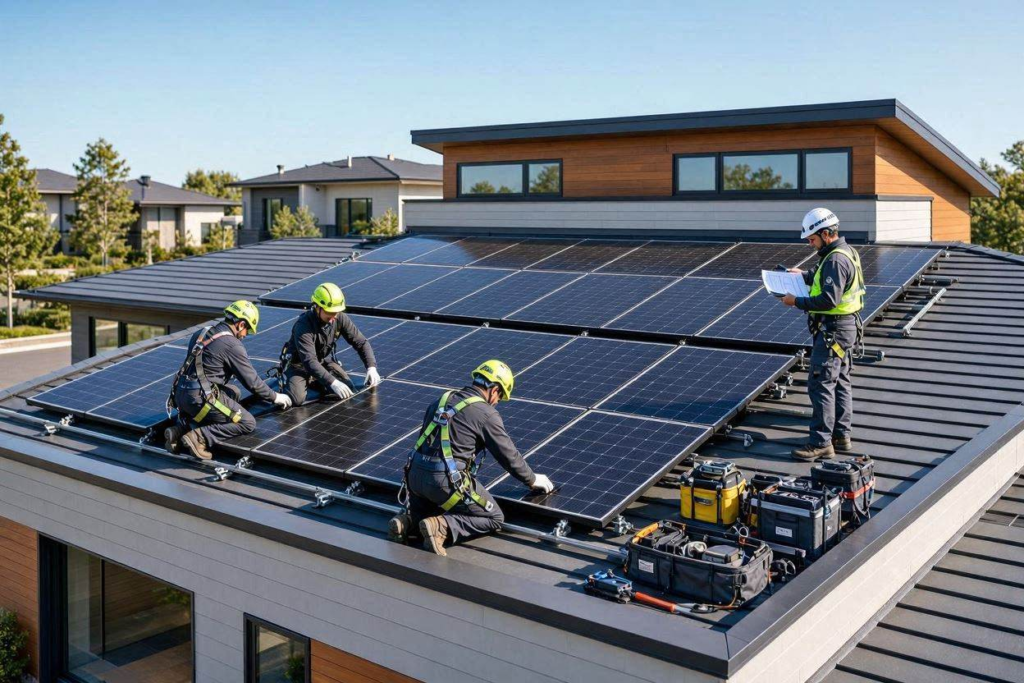
Once a layout is finalized, the system moves through permitting, scheduling, and installation, generally finished within a few days for most residential homes. Permitting timelines vary by city and utility, so staying power allows
- Physical setup is generally brief compared to the paperwork
- A final inspection confirms the whole lot meets local safety codes
- After activation, upkeep stays minimal. Occasional tracking and uncommon professional cleanings are normally sufficient to keep a device acting at its designed capacity for its full lifespan.
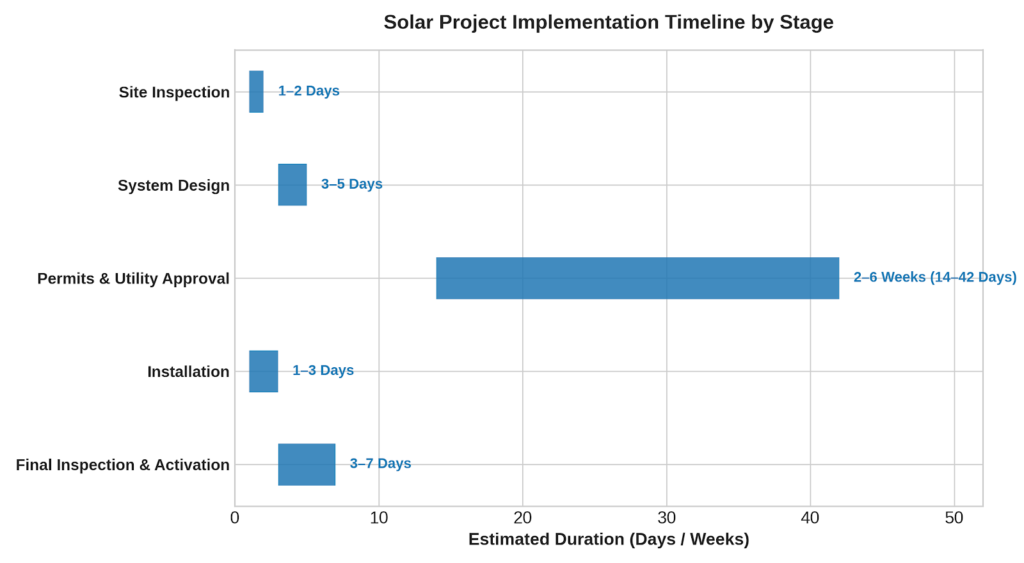
| Project Stage | Estimated Duration | Key Activities & What Happens |
| Site Inspection | 1–2 Days | On-site structural roof evaluation, shade analysis, and electrical panel capacity assessment |
| System Design | 3–5 Days | Engineering custom solar layout, selecting hardware components, and finalizing electrical schematics |
| Permits & Utility Approval | 2–6 Weeks | Submitting engineering plans for local municipal permits and utility interconnection approval |
| Installation | 1–3 Days | Physical mounting of roof hardware, wiring inverters, and positioning solar panels |
| Final Inspection & Activation | 3–7 Days | Municipal safety inspection, utility meter upgrade, permission to operate (PTO), and system startup |
Project Timeline Insights
- Total Project Lifecycle: The complete end-to-end process typically spans 3 to 8 weeks, with the vast majority of time allocated to administrative municipal permitting and utility approvals.
- Rapid Physical Deployment: Actual hands-on disruption at the property is minimal, as physical installation and site inspections account for only 2 to 5 days of total project execution.
Final Thoughts
Rooftop electricity has shifted from a novelty to one of the smartest long-term financial moves a property owner can make. The savings are real, the technology has matured, and the barriers to access are getting lower. What separates a gadget that delivers from one that disappoints comes all the way down to planning and who installs it. Compare vendors, ask direct questions, and prioritize a layout built around your real usage, and the payoff will speak for itself.
Frequently Asked Questions
1. How speedy can a rooftop machine pay for itself?
It depends on your power utilization, neighborhood charges, and system size, but many homes see a payback length of several years, followed by means of decades of considerably decreased power prices.
2. Will a rooftop system work if my roof receives partial shading throughout the day?
Partial shading isn’t necessarily a dealbreaker. A proper assessment can pick the best panel placement and layout to decrease the effect of shaded areas on total output.
3. Do I need a battery to benefit from a rooftop system?
No, many structures work well without one, especially when paired with net metering. A battery genuinely extends financial savings into the evening and provides backup power throughout outages.
4. How long does the total system take from quote to activation?
Most initiatives take some weeks to a couple of months, with the majority of that time going towards permitting and application approval rather than the physical installation itself.
5. What happens if my strength desires exchange after installation?
Systems can regularly be expanded later if usage will increase, although it is worth discussing plans together with your installer in advance so the initial layout can accommodate some growth.